Showing posts with label Research. Show all posts

Friday, April 5, 2019

Hunting the ancient agave

Agaves spend much of their lives as toothy, spikey plants we avoid while hiking. Most agaves bloom only once, throwing their heart and carbohydrates into raising an exorbitant stalk of fragrant flowers that ripen into dry fruits stacked with flat, black seeds. We're captivated by the transformation from spikey to florescent.

Wendy Hodgson makes agave seeds fly in Cascabel.
However, for over 8,000 years, people have harvested agaves just before flowering, usurping the carbohydrates in the stem for human food and beverage. The leaves also provide fibers for rope, baskets, bags and sandals.

Although people have used agaves continuously in Mexico, the plants' cultivation and culture faded from what is now Arizona by the 18th century. Residents of the Middle San Pedro Valley have periodically wondered if we could grow agave in our area. After all, Sobaipuri Native American agave fields dot our community, and wild agaves grow in the valley.

When this question came up again last winter, we learned that survivors of pre-Columbian cultivated agave had recently been found in our area. Wendy Hodgson and her colleague Andrew Salywon, both with the Desert Botanical Garden, named the new species Agave sanpedroensis. Wendy and Andrew even suggested that this low-water-use crop could be revived to diversify agriculture and stimulate new industries in the U.S. Southwest.

Agave sanpedroensis.
We contacted Wendy, who was as eager as we were to connect. In January 2019, she told a packed Cascabel Community Center about the eight (and counting) species of formerly cultivated agaves she and her colleagues have found. In February, dozens of people braved blustery weather on a follow-up field trip. Wendy explained how she recognizes the different species of agaves and outlined how we can help her survey the plants in our valley.

Wendy and Andrew work with archaeologists, who have documented extensive agave fields at many sites in central and southern Arizona. Rows of rocks along contour lines slowed runoff across the fields and rock mulch piles reduced evaporation. Near the fields, archaeologists find knives used for removing leaves and roasting pits where agave stems, or "heads," were baked to sweetness.

The plants we see today are genetically identical to those the Sobaipuri and other groups developed to suit their needs. Unlike their wild relatives, these cultivated agaves produce little or no seed. Instead, the plants reproduce vegetatively, usually by pupping, to produce offspring identical to the parent. Cultivated agaves are also sweeter than their wild relatives and their leaves are easier to cut.

After surviving drought, insects, and rodents for centuries--or millennia--climate change and development threaten these rare plants. As cultivated crops, they fall into a protection gap: the Endangered Species Act protects only wild species and the Archaeological Resources Protection Act protects only inanimate artifacts.

Wendy fears that these recently discovered, living storehouses of information on people, culture, and plants could be lost. She is helping residents of the Middle San Pedro Valley learn about the ancient agaves in their area and work to protect them.

Thursday, September 20, 2018

An entomological who dunnit

Jeff Lockwood's book, Locust: The Devastating Rise and Mysterious Disappearance of the Insect That Shaped the American Frontier is available on Amazon, where I reviewed it.

Scientific understanding usually shuffles along in the two-to-three-year steps of graduate student research projects. Big, intriguing mysteries take longer to resolve, but are more fun to research—and more interesting to read about.

Jeff Lockwood tackled the mystery of why the Rocky Mountain locust went extinct at the dawn of the 20th century. The species' periodic irruptions rivaled the bison in terms of biomass and the 1875 outbreak still horrifies young readers of Laura Ingles Wilder's, On the Banks of Plum Creek. Then the insects disappeared.

In his book, Lockwood recounts the challenges of sleuthing out a big mystery. Big research projects require new research techniques and years of soul-crushing work counting, dissecting, measuring, and recording data. Papers describing new research findings are sometimes rejected by academic journals; colleagues sometimes snicker. Unearthing the Rocky Mountain locust's secrets required field work at remote high elevation "grasshopper glaciers" reached by difficult climbs in foul weather.

Big research projects need lots of brains and lots of backs. Lockwood doesn't hog the limelight; he credits his employees, students, and colleagues for their inventions and insights. Field research is carried out by people, so it's a social activity, which Lockwood captures. A twenty-five-mile hike, completed in the dark, isn't quite as bad when you're not suffering alone, and joy shared at discovery is joy multiplied.

Other ecological changes in the late 19th century might have been linked with the locust's disappearance: decline of the bison, changes in climate, or reduced burning by Native Americans. Lockwood guides readers through the possibilities and explains why he rejects each. He focuses instead on the ecological bottleneck of limited egg-laying sites in valleys of the northern Rocky Mountains. Lockwood determines that when settlers plowed and grazed these areas, they destroyed the locust's eggs, and with them, the species. The culprit was settlers, in valleys, with plows, by accident.

Although the Rocky Mountain locust's sky-filling swarms are gone with the thundering bison herds, Lockwood ends his book by wondering if a few individuals may live incognito in less disturbed valleys of the Rockies. Another big, intriguing mystery.

Thursday, May 12, 2016

The vineyard is a-LIVE

Vineyards are evocative, pastoral landscapes that invite visitors to linger and relax with a glass of wine. These agricultural fields can be more or less environmentally friendly, depending on how they are managed. Bitner Vineyards is the first and, so far, only Low Input Viticulture and Enology (LIVE) certified vineyard in Idaho.

Ron and Mary Bitner use science-based practices to protect water, soil, and pollinators. The couple provide habitat for pollinators and use cover crops, integrated pest management (IPM) techniques, and biological control methods to reduce their use of pesticides. Embracing science comes naturally for Ron Bitner--his first career took him around the world as an expert on leafcutter bees for pollinating alfalfa.

I wrote about the Bitner’s LIVE vineyard in the Spring issue of Edible Idaho.

Tuesday, August 4, 2015

Who should monitor federal rangelands?

“The fox guarding the henhouse.” That's what Linda Price expects some to say about a new rangeland monitoring program. I quoted the manager of the federal Bureau of Land Management (BLM) Field Office in Salmon, Idaho, in a recent article.

The Idaho State Department of Agriculture (ISDA) saw the need for more information on the condition of BLM rangelands in the state and came up with a solution. Brooke Jacobson, ISDA’s coordinator for the project, helps ranchers get start collecting vegetation data on land they lease for livestock grazing. Meanwhile, the BLM’s vegetation specialists are stuck at their desks doing paperwork. A steady stream of time-sucking lawsuits provides job security, but keeps agency employees away from their monitoring duties.
Brooke shows ranchers how to take annual photos at BLM monitoring sites and send their data to the agency. Ranchers can also attend one of the University of Idaho’s monitoring workshops. In this pilot program, ranchers will monitor only upland rangelands, not sensitive riparian areas. They won’t be measuring, or even counting, vegetation; they’ll be collecting photographic data.

Even with training and help from Brooke, some people might not think ranchers are up to the task. The skeptics must never have worked on a veg crew.

When I hired crews to collect vegetation data at the U.S. Geological Survey, I didn’t ask if applicants knew how to count plants. I asked the hard question: “Can you handle a summer living out on the Sagebrush Sea?” Anyone who can tolerate boring, repetitive tasks can learn to collect data; only a few hardy souls can sleep in a tent, haul water, and build a toilet with a shovel all summer. Data collection ain’t rocket surgery.
Nonscientists collecting data is nothing new. Amateur and professional scientists work together on the North American Breeding Bird Survey. They receive the same training and their data go into the same valuable dataset on bird numbers and distribution. Citizen scientists also record the seasonal changes in plants and animals for the National Phenology Network. This information helps scientists identify patterns of global climate change, which helps planners address the social and economic stresses that result.

You could argue that ranchers might fudge the data when monitoring their grazing lands. If you did, I’d point out that anyone could be tempted to blink at the wrong time while reading data. Every BLM employee has an opinion on livestock. Researchers have their favorite hypotheses. Even universities listen to their supporters, legislators, and alumni, all of whom have biases.

Software developers are making data collection easier and more accurate for both citizen and career scientists. Before Amazon ever heard of drones, Terry Booth, at the USDA’s Agricultural Research Service in Cheyenne, WY, was photographing rangelands from light aircraft. The photos were clear enough to count plants and measure bare ground. In other words, they were detailed enough to monitor rangelands.

It’s been years since I saw a rancher with a flip phone (four months since I gave up mine). Smart phone cameras take excellent pictures and a University of Nebraska app makes photographing the same spot every year...a snap.

Ranchers and BLM employees look through the same viewfinder, but they see different things. Most agency workers move several times during their career. Most ranchers stay put for decades; their families often stay rooted for generations. Ranchers experience many El Niño and La Niña years on the same land. They see swings in precipitation and note the effects on plants and livestock. Ranchers are on the land 24/7/365 and they see things.
When my friends Jake Weltzin and Steve Archer investigated why mesquite trees were invading Texas grasslands, they asked the local ranchers. Guy and G. D. London told my friends that mesquite moved in after they killed the prairie dogs. Jake and Steve tested the ranchers' hypothesis and found that prairie dogs keep mesquite out of grasslands by clearing away seedpods and stripping bark from seedlings.
Rumor has it that ranchers remember three years: this year, last year, the best year. Researchers know memories fade and insist on written data. In the words of Adam Savage, one of Discovery channel’s MythBusters,“The only difference between screwing around and science, is writing it down.”

Ranchers will go one better when they monitor their rangeland: they’ll take pictures. Then they're write down when and where they took them.

Sunday, December 15, 2013

Reestablishing Fire Cycles in the Great Plains

Before Europeans arrived, fires routinely swept the Great Plains, rejuvenating grasses and suppressing trees spreading from the riparian areas that cross the region. Whether lightening caused or set by Native Americans, fire maintained the grasslands and provided lush grazing for bison. Europeans plowed the grasslands for crops and put out wildfires, disrupting natural fire regimes.

Today, land managers in the Great Plains are setting planned burns to reintroduce fire and reestablish fire cycles. I wrote a fact sheet about using planned burns for the Great Plains Fire Science Exchange (GPFSE).

The GPFSE increases understanding and improves management of fire in the Great Plains. This region stretches from Montana and North Dakota to central Texas. The Exchange is funded by the Joint Fire Science Program (JFSP). The JFSP funds research on wildland fires needed by policy makers and land managers.

Monday, December 3, 2012

Have a Cheatgrass Beer and Help the Great Basin

Revenge is a dish best served cold: about 45 degrees for amber ales. Tye Morgan has a plan to foil cheatgrass and heal native Great Basin plant communities by brewing beer. She told Ira Flatow about it recently on NPR’s Science Friday.

As an environmental researcher, Tye finds ways to manage invasive cheatgrass. In her off hours, she and her husband, Joe, are home brewers who teach others how to turn grains, hops, yeast, and water into ales, lagers, and stouts in Reno, Nevada. Tye combined her knowledge of cheatgrass with her love of brewing to come up with a way to restore cheatgrass-invaded areas while producing beer. "Every time people drink our beer, they are doing something to save their desert," she told a local news outlet.

Cheatgrass lives fast and dies young

Conservationists, ranchers, and fire fighters shudder each summer when nonnative cheatgrass dies to form a carpet of tinder.

Although native plants burn, too, cheatgrass stalks carry flames especially well. What’s more, cheatgrass has already assured its survival by the time fire season rolls around. The plants produce a bumper crop of seeds each spring--up to 65,000 per square meter--that sprout into new plants the following fall.

Our native perennial grasses and sagebrush, on the other hand, hunker down and survive the hot, dry summer as dormant live plants. Rooted in place, they can't run and are killed by fire.


When the ashes have cooled, cheatgrass seeds blow or hitch rides on fur or socks into burned areas. With the native plants dead or damaged, the uninvited guests sprout to find they're the only ones at the banquet. Cheatgrass gobbles up soil nutrients and water and produces another crop of seeds to continue the cycle.


By harvesting cheatgrass seeds each year, Tye hopes to both reduce the number of cheatgrass plants and improve conditions for our native plants. Fewer cheatgrass seeds means fewer cheatgrass plants sprouting. Repeatedly taking off the nitrogen-rich seeds for beer should gradually reduce the level of this plant nutrient in the soil.

Fast-growing cheatgrass needs lots of nitrogen to support its lifestyle. But the native plants, with their more tortoise-like approach to the race for survival, thrive in less fertile conditions. Tye will count the cheatgrass seeds and measure the soil nitrogen to know when native plants have the best chances. Then she'll reseed the area with a mix of native species.


Amber ale and more

Ira Flatow tasted Tye and Joe’s amber ale cheatgrass beer and pronounced it "delicious." Tye explained to the Science Friday host that they mix barley with the cheatgrass seeds. Barley adds an enzyme that turns starch in the seeds into sugar; cheatgrass lacks this enzyme. Once the sugar is released, yeast converts it to alcohol.

The couple isn’t satisfied with just one type of beer. Their company, Bromus Tech, is working with Lance Jergensen, an independent malster who specializes in local barleys, and Ryan Quinlan, at Great Basin Brewery, to develop several different cheatgrass beers.

Tye's ideas aren't limited to beverages. She points out that agricultural chemicals are rarely used on the wildlands that cheatgrass invades. She plans to use the spends seeds left from the brewing process to produce organic grass fed beef. You'll be able to have an organic grass-fed cheatgrass-finished burger with your cheatgrass beer.

Once they’ve perfected their line of beers and fine-tuned their restoration techniques, Tye and Joe will share their knowledge with other brewers. Tye envisions small breweries across the West harvesting local cheatgrass and producing delicious beers. "I think that Idaho cheatgrass beer would catch on like wildfire," she told Ira Flatow.

Sunday, October 28, 2012

A Plague with an Upside?

My office phone rang with a missing plants report: miles of cheatgrass had disappeared in Winnemucca, Nevada. It was the spring of 2003

When the rangeland manager on the phone saw the first bare areas, he was surprised. When he found whole valleys without plants, he called the new plant ecologist at the U.S. Geological Survey in Boise. I said I didn’t know where the cheatgrass went, but I’d take a look.

I was looking for a fugitive with few friends. Weedy, nonnative cheatgrass usually blankets large swaths of the Intermountain West. This annual grass moves in after native plants are killed by fire, weakened by drought, or damaged by people or livestock. Cheatgrass sprouts in fall or early spring across the lowest, driest parts of the West. The young plants sink roots to forage for water and nutrients while many of our native plants are dormant. Before cheatgrass plants die in spring, each produces a bumper crop of seeds to continue the cycle the next year.

A few days after the alarming phone call, I stood in what had been rangeland. The area seemed to have been bladed for a  parking lot. The few surviving plants were a short hike apart. The survivors were all native perennials--and they were thriving. The globemallow, indian ricegrass, and squirreltail were guzzling the water and nutrients left after the usual crop of cheatgrass failed to grow.

At the edges of the cheatgrass die-off, the ‘dozer driver seemed to have stopped for lunch and forgotten to come back. Miles of bare soil ended abruptly in normal-looking cheatgrass. The farthest edge of the dieoff ended partway up the toe slope of the nearby mountains, as if the ‘dozer driver had avoided driving on the steepest slopes.


I had a long list of ways plants can die; I needed help narrowing down my list. I stopped at the nearest ranch and asked about the missing cheatgrass.

The couple working in the corrals was younger than the century-old ranch, but they hadn’t seen a year without cheatgrass before. “My son says it’s army cutworm. He lives up the road,” said the woman, who wore a painful-looking shiner inflicted by one of the horses.

The son, Jim, described seeing insect larvae “eating every green shoot” on a warm, dry January evening. “It was warmer than today,” he said, as I shivered in the June dusk in his front uaof his house. Jim did what researchers do: he photographed the insects and took some to the local U.S. Department of Agriculture office. The entomologist ID’d them as army cutworms.

As I drove away, I congratulated myself on inquiring locally to solve the mystery in record time. Then I did what researchers do: I got a second opinion.

“Army cutworms??” My entomologist friend’s voice shot up in surprise. “No way. Army cutworms would never eat that much cheatgrass.” She vouched for the insects--they were innocent. I needed a third opinion.

The next entomologist laughed out loud. I went back to my list of Ways Plants Can Die.

Walking to and from work, or driving to remote field sites, I went over my mental list: Frost? Yes, cold air drainage might damage plants in the bottoms of the valleys and leave those on nearby slopes. Fungal root disease? Probably not during a warm, dry winter, as fungi need abundant moisture. And how could a fungus kill ALL the plants in an area? And why would it suddenly stop killing plants at the edges of patches?

Months later, a second witness came forward and fingered army cutworms. A researcher in northern Utah had seen larvae destroying his cheatgrass experiment.

Finally, that fall, I found an entomologist in western Colorado who had seen army cutworms devouring cheatgrass and crops in his area. The outbreak of larvae hadn’t surprised this witness, as he’d noticed more miller moths than usual the previous fall. He knew they would lay eggs that would hatch into army cutworms.

Although few people know army cutworms in the Intermountain West, residents east of the Rockies know both larvae and adults all too well.

Between its summer wildfires and winter blizzards, Colorado’s Front Range suffers semiannual plagues of miller moths. Billions of the insects invade in spring and late summer as they migrate from the Great Plains to and from high peaks of the Rocky Mountains.

The moths annoy local residents by loitering around lights, invading homes, and defecating on walls. Media describe “squadrons” of moths “attacking” and “dive-bombing” people. The insects’ unpleasant habits make it hard to appreciate the impressive journey these tiny creatures complete: on a two-inch wing span, miller moths make a thousand-mile round trip on their summer vacation.

The moths that fly through Denver and Fort Collins each spring hatched in the soil of the Great Plains the previous winter. The army cutworm larvae hide underground during the day and come out to feed at night. Sprouting fields of wheat, and other crops, are just the right height for the hungry insects.

The cutworms' nocturnal habit makes it hard to catch them in the act of destroying crops. The young larvae are so tiny that it's hard to see them at all--until it's too late. The insects earn their moniker when they reach 1½ inches and are mostly jaws. After consuming all the food in an area, the army marches off in search of more. The destruction ends when the troops stop, drop, and pupate in the soil. They emerge several weeks later as miller moths.

Although a long, wet spring can persuade the moths to linger and feed along the Front Range for weeks, their summer home is high elevation slopes around Yellowstone Park. The insects feed at night and congregate among the rocks of cool talus slopes during the day. The gatherings of moths are grizzly bear banquets. By eating as many as 40,000 moths a day, the bears get up to half their yearly energy from the maligned miller moths.

In late summer, the surviving moths turn their back on the Rockies and head back east to the Great Plains. Or do they all? Do any of the Yellowstone moths fly west? Or do "our" miller moths spend their summers in talus slopes closer to home?

Farmers in the Great Plains check their fields for army cutworms, homeowners along the Front Range recalk their windows before the miller moth migration, and Yellowstone’s bears count on the plump insects to get them through the next winter. But the army cutworm outbreak of 2003 was a surprise attack in the Intermountain West. We don’t know exactly why there were so many larvae that year or even where the adults spent the previous summer.

I blame army cutworms, perhaps working with a pathogen accomplice, for the disappearance of hundreds of thousands of acres of cheatgrass in the Intermountain West in 2003. The weather was perfect for the insects, the cheatgrass disappeared when the larvae were feeding most voraciously, and their need to stop eating and pupate could account for the sharp borders of the bare areas. (Full disclosure: some other researchers scoff at the idea.)

We haven't had a big army cutworm year since 2003--or seen big cheatgrass dieoffs. But the insects are still here, waiting for their next opportunity. Our warming climate could give them many opportunities in the future.

Army cutworms need both a mild winter and lots of eggs to reach impressive numbers. That means lots of miller moths have to return from their summer journey. When we see high numbers of miller moths in late summer, followed by a warm, dry winter, we need to start looking for army cutworms on our rangelands. When we see bare areas where we expect to see cheatgrass, it’s time to get out the seeders and reseed those areas with native perennial plants. Without competition from cheatgrass, the seeded plants will be able to establish vigorous stands that can hold the line against cheatgrass.

In August and September, I trapped and counted miller moths in the foothills of the Boise Front. Pheromones--scents that female moths make to attract males--lured males into the traps.


When I catch lots of moths in fall and we have heavy late summer rain followed by a dry winter, I'll start looking for army cutworms and watching for bare areas. The next time someone calls with a missing cheatgrass report, I'll start with my prime suspect.

Monday, June 25, 2012

I Live in a Smile

My essay on the Snake River Plain appears on Orion Magazine's The Place Where You Live page. Map of Idaho, courtesy Idaho State University Dept. of Geosciences.

The Snake River Plain cracks a smile across southern Idaho. It curves down from the Centennial Mountains on the east toward Nevada, then turns up northwest toward Oregon. I followed the Plain to Boise a decade ago to work as a federal ecologist, one of thousands of new Idahoans flooding the Plain and loving it to death.

The hot spot that now powers the geysers of Yellowstone poured the Plain’s foundation. As the Ice Age thawed, Lake Bonneville escaped down the Snake River. The megaflood blasted out house-sized chunks of lava and cut laugh lines into the Plain.

Serene mountains outline the edges of the smile and help me navigate unpaved roads on the sagebrush desert. My car kicks up silt that nearly matches its Champagne Gold paint.

Formed from fire and shaped by water, the Plain is dominated by wind in spring. This is when I study the effects of federal vegetation improvement projects on sage grouse habitat. In less disturbed areas, sagebrush is skirted by duvets of plush moss, attended by native grasses, and dotted with purple larkspur and lupine. In summer, yellow rabbitbrush shines. The grouse and I startle each other when I walk too close to where they hide from legal battles over the status of their species.

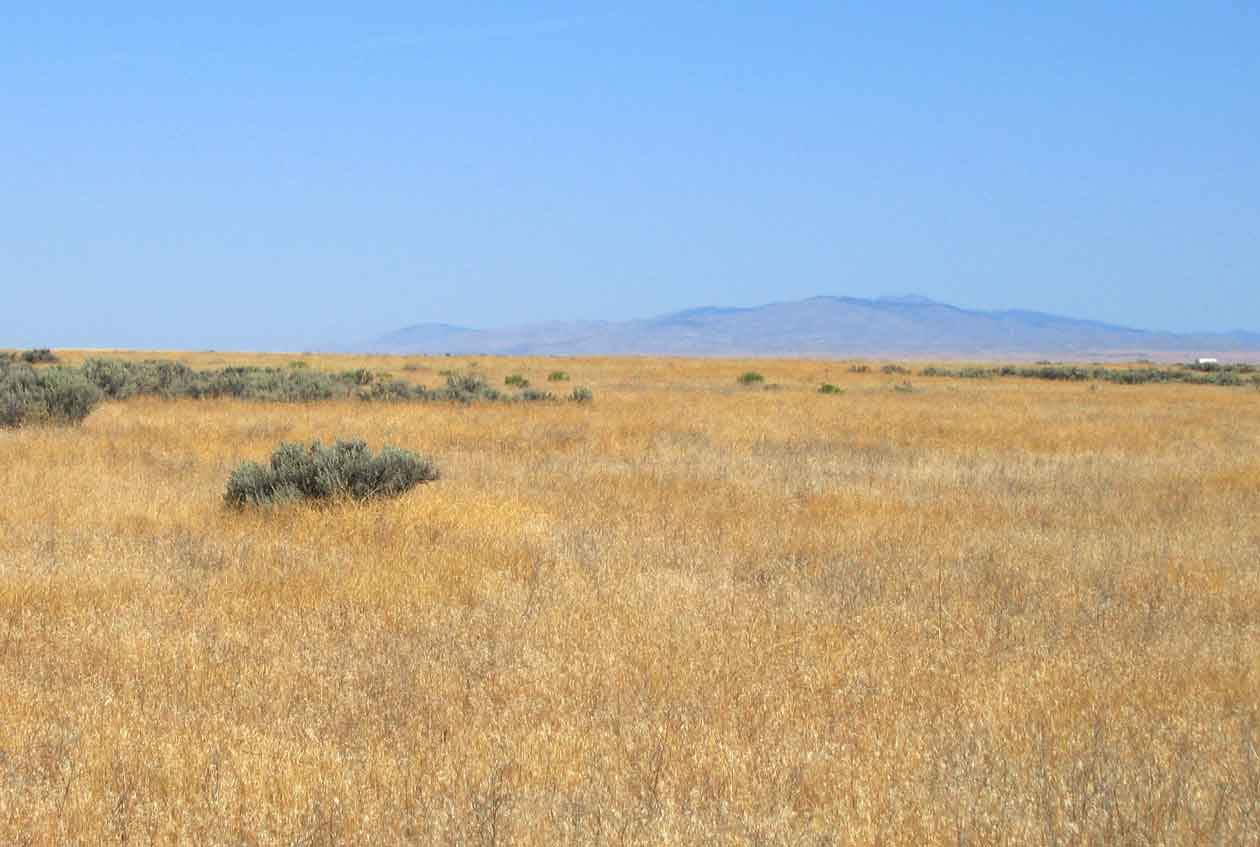
In more disturbed areas, ragged cheatgrass spears up among the native plants, ready to carry wildfire. The cheatgrass coalesces into scabs after fire removes the sagebrush. Much of the lower elevations have been scabbed over.Sterile green bandages of non-native wheatgrass plantings protect against the invasive cheatgrass. The plantings fade to monochrome gold in summer.

Sage grouse congregate among more recent lava flows around Craters of the Moon. The flows are impossible to plow, so settlers did not sink roots into the lava. It is tough on boots, tires, and hoofs, which leave the land to the grouse. I conclude that sage grouse would benefit from the application of more lava. The Craters operate on a longer time frame than federal funding cycles, but an eruption is due.

I worry about the Plain. The Plain cracks a smile.

Monday, June 4, 2012

Coyotes, Carbon, and Corn

The neighbors across the road said they had killed almost a dozen coyotes in our woods. I wondered what the animals were eating in our 18 acres of Indiana maple and beech. Coyotes’ sharp noses and antennae ears help them catch critters that we can’t hear or see, but there couldn’t be much for them to eat in our small woods.


My aunt, who I was staying with while I pulled weeds in the woods, had more information that evening. She said the coyotes had been leaving the woods and going over to the neighbors’ house. They shot the animals to keep them out of their yard. I remembered that dogs had barked at me from across the road when I popped out of the woods on that side. Once I knew about the neighbors’ dogs, I knew what the coyotes were eating. They weren’t finding it in our woods.

I understood what was happening in Indiana because I missed a question in a graduate student exam at the University of Arizona. One of my professors asked if coyotes on the east side of Tucson were eating plants--and animals that ate plants--that grew in winter or in summer.

His exact words were, "What’s the carbon isotope ratio of coyotes on the east side of Tucson?”

Isotopes are different versions of elements; carbon is one of the elements. All plants use carbon, from the carbon dioxide (CO2) in the air, to make food and grow. Plants get CO2 through pores, or stomates, in their leaves. However, there’s a danger to opening these structures to let in CO2. Whenever their stomates are open, plants are also losing water through evaporation--the plants are drying out.

Plants that grow during Tucson’s hot summers use CO2 more efficiently than plants that grow during the cool winters. Summer plants are more efficient because they use more of each batch of CO2 they bring in, right down to the dregs. For plants, the dregs are CO2 molecules that contain the carbon isotope they don’t like as well.

This means that summer-growing plants use more of the less preferred isotope than winter-growing plants. When scientists compare the amounts of the two main isotopes of carbon, they can tell if an animal has been eating plants, or animals that ate plants, that grew in the winter or the summer.


When I answered the question, I guessed that the coyotes and their prey were eating whatever was in season. They both had to make do with what they could find among the tall saguaro cactus and shrubby triangle leaf bursage of the Sonoran Desert that surrounds Tucson.

What I didn’t know was that the Tucson coyotes were leaving the desert and coming into town--just as the Indiana coyotes had been leaving our woods and going to the neighbors’ place.

The professor said that the coyotes were eating summer plants all year. Make that one summer plant: corn. The coyotes were coming into town to clean up dog food left in back yard bowls. Most of the major dog food brands are mainly corn, so the coyotes were living on corn kibble.

Our Indiana neighbor's dog food bowl was a more reliable source of food than the few prey animals in our woods. And the dog food was a lot easier to sneak up on. I wondered if our neighbors knew they were helping the coyotes raise large litters of pups that would then follow their parents to dinner.

I emailed my mother about the coyotes in her woods and the corn kibble at the neighbors’ the next day. She understood the coyote issue because she had seen another example near where she lives. She emailed back that Edina, Minnesota had been "overrun by coyotes" a few of years earlier. "People saw them in the parks, and they attacked small pets," she wrote.

The city thought about trapping the coyotes, but Wile E. Coyote wasn’t just the figment of a cartoonist’s imagination: coyotes are wary and difficult to catch. The city’s legal department said no to killing coyotes in close proximity to taxpayers. Instead, the City of Edina launched an education campaign. Persuading people to stop feeding coyotes either intentionally, in order to watch the animals, or unintentionally, by leaving dog food out, was the safest and most effective way to deal with the problem.

Indiana and Minnesota aren’t the only places where coyotes and people don’t understand each other. The rural-urban interface expands and problems grow as more people bring their urban lives and expectations to rural and wild places. Coyotes are resourceful hunter-gathers. They soon learn that people mean food and poaching dog bowls is an easy living. The people don’t always catch on right away that they’re supporting the local coyote population.

Generations of humans have loved coyotes’ nighttime concerts. The performers are called “song dogs” in southern Arizona. But when people leave bowls of dog food out at night, they’re inviting the band over for an after party. Cutting off the coyotes’ supply of corn kibble is a more effective and more humane way to rescind the invitation than following them to their dens and shooting them.

--------

Update

Edina now encourages residents to haze coyotes.

Wednesday, May 2, 2012

Dear Scientist, The Public Values Your Work--Tell Them Your Story

The Pew Research Center reported, in 2009, that Americans value the work of scientists and believe that science improves our lives. Scientists, on the other hand, are disappointed in the public’s understanding of science.

In cooperation with the American Association for the Advancement of Sciences, the report found that scientists blame the media for doing a poor job of educating the public. Specifically, they believe that news reports do not distinguish between findings that are supported by evidence and claims that are not.

However, the days of scientists staying in their labs and leaving the reporting to the non-scientific media appear to be numbered. The National Science Foundation, which funds innovative science and engineering research, is training scientists to tell the story of their research using narrative techniques.

I see a similar gulf in rangeland science. Range managers value the work of plant ecologists and range science researchers, but researchers are often disappointed in how the knowledge they develop is applied on the ground. Managers, on the other hand, are frustrated by the flood of jargon-laden papers researchers produce.


I looked at this conflict, and described how scientists can use narrative nonfiction techniques to tell their story to diverse audiences, in my February, 2012 Land Lines column in Rangelands, a journal of the Society for Range Management.