Showing posts with label Food. Show all posts

Friday, April 5, 2019

Hunting the ancient agave

Agaves spend much of their lives as toothy, spikey plants we avoid while hiking. Most agaves bloom only once, throwing their heart and carbohydrates into raising an exorbitant stalk of fragrant flowers that ripen into dry fruits stacked with flat, black seeds. We're captivated by the transformation from spikey to florescent.

Wendy Hodgson makes agave seeds fly in Cascabel.
However, for over 8,000 years, people have harvested agaves just before flowering, usurping the carbohydrates in the stem for human food and beverage. The leaves also provide fibers for rope, baskets, bags and sandals.

Although people have used agaves continuously in Mexico, the plants' cultivation and culture faded from what is now Arizona by the 18th century. Residents of the Middle San Pedro Valley have periodically wondered if we could grow agave in our area. After all, Sobaipuri Native American agave fields dot our community, and wild agaves grow in the valley.

When this question came up again last winter, we learned that survivors of pre-Columbian cultivated agave had recently been found in our area. Wendy Hodgson and her colleague Andrew Salywon, both with the Desert Botanical Garden, named the new species Agave sanpedroensis. Wendy and Andrew even suggested that this low-water-use crop could be revived to diversify agriculture and stimulate new industries in the U.S. Southwest.

Agave sanpedroensis.
We contacted Wendy, who was as eager as we were to connect. In January 2019, she told a packed Cascabel Community Center about the eight (and counting) species of formerly cultivated agaves she and her colleagues have found. In February, dozens of people braved blustery weather on a follow-up field trip. Wendy explained how she recognizes the different species of agaves and outlined how we can help her survey the plants in our valley.

Wendy and Andrew work with archaeologists, who have documented extensive agave fields at many sites in central and southern Arizona. Rows of rocks along contour lines slowed runoff across the fields and rock mulch piles reduced evaporation. Near the fields, archaeologists find knives used for removing leaves and roasting pits where agave stems, or "heads," were baked to sweetness.

The plants we see today are genetically identical to those the Sobaipuri and other groups developed to suit their needs. Unlike their wild relatives, these cultivated agaves produce little or no seed. Instead, the plants reproduce vegetatively, usually by pupping, to produce offspring identical to the parent. Cultivated agaves are also sweeter than their wild relatives and their leaves are easier to cut.

After surviving drought, insects, and rodents for centuries--or millennia--climate change and development threaten these rare plants. As cultivated crops, they fall into a protection gap: the Endangered Species Act protects only wild species and the Archaeological Resources Protection Act protects only inanimate artifacts.

Wendy fears that these recently discovered, living storehouses of information on people, culture, and plants could be lost. She is helping residents of the Middle San Pedro Valley learn about the ancient agaves in their area and work to protect them.

Monday, September 26, 2016

Local land trust helps Swift River Farm grow in Salmon, Idaho

Local food used to be the only food in rural central Idaho. People living in isolated mountain valleys grew and shared most of what they ate. When paved roads and trucks arrived to stock grocery store shelves, residents shopped more and farmed less.

Jessica McAllese and Jeremey Shreve are (re)creating local food networks in Salmon, Idaho. The couple settled in the Lemhi County town in 2013 with a border collie named Nora, a tractor named Fergie, and years of experience farming in Pocatello.

Salmon has been fertile ground for Shreve and McAllese’s Swift River Farm. Other small farmers, a local foods group, and a farmers market are reviving small scale production and distribution systems.


Ranchers started the Lemhi Regional Land Trust to protect local landscapes and rural lifestyles. The trust found a way to help McAllese and Shreve buy land to expand their farm and build a home together.

I told the Swift River Farm story in the Summer issue of Edible Idaho.

Thursday, July 2, 2015

Three degrees, no garlic scapes

In three agriculture degrees, several botany classes, and decades as a plant ecologist, I never ran into garlic scapes. I know and use terms such as “homoploid hybrid species” and “Pseudotsuga menziesii.” But, until last Saturday, I’d never met a garlic scape.

Jessica and Jeremy of Swift River Farm introduced me to the curvy, green flower shoots at their booth at the Lemhi County Farmers Market in Salmon, Idaho. The couple, who also sell subscription shares in their farm’s produce, spun an improbable tale of sex and scapes.

Long before humans began sautéing cloves or warding off vampires with the heads, garlic dispensed with seed. The plants gave up sex. Each of these Shakers of the plant world eschewed others of its kind and simply produced garlic heads that grew into plants that produced garlic heads.

Jeremy and Jessica embrace garlic’s celibacy and plant individual cloves, which grow into plants that produce full heads. Each plant is genetically identical to its single parent, which is identical to its single parent, and so on back through time.

Oddly, some kinds of garlic still produce flowers, as if trying to blend in with the rest of the plant world. While other plants produce flowers with male and female parts that swap genes with the opposite flower parts to form seeds, garlic flowers form bulbils. Bulbils look like tiny cloves and grow into plants identical to their parent.

The scapes I discovered at the market are garlic flower stalks with developing bulbils. I cut open one of the largest developing flower clusters.


I’ve also learned there are two kinds of garlic: soft neck and hard neck. The garlic in grocery stores is the former, as it stores well enough to keep the produce bins stocked all year. I might be excused my garlic-scape ignorance, as they are only produced by hard neck garlic. These types are grown in cooler climates and usually consumed locally, as they don’t store well.

My new friends, the garlic scapes, gave me the perfect excuse to skip my usual toast-and-yogurt breakfast and linger over an omelet-and-garlic-scape-potato Sunday brunch.

Saturday, June 27, 2015

Smooth Brome in Full Glorious Bloom

In Salmon, Idaho, the springtime blues of lilac and larkspur are fading to yellow sunflower, mullein, and mum. Their colors echo the intensifying sun, as it pauses to catch its breath before marching south again. The gardens bursting with blooms catch our eye and make it easy to overlook the grasses. Although many people don’t think of them as “flowering plants,” bromes and bluegrasses bust out with intricate, usually overlooked, flowers.

A pickup truck stopped while I was photographing smooth brome flowers on a late spring morning. The passenger-side window motored down and the designated questioner asked if I had found a fawn. “No,” I said, “I’m photographing the bromegrass in full, glorious bloom. Who could resist?” DQ smiled through his snort. “I could.” The designated driver drove on.


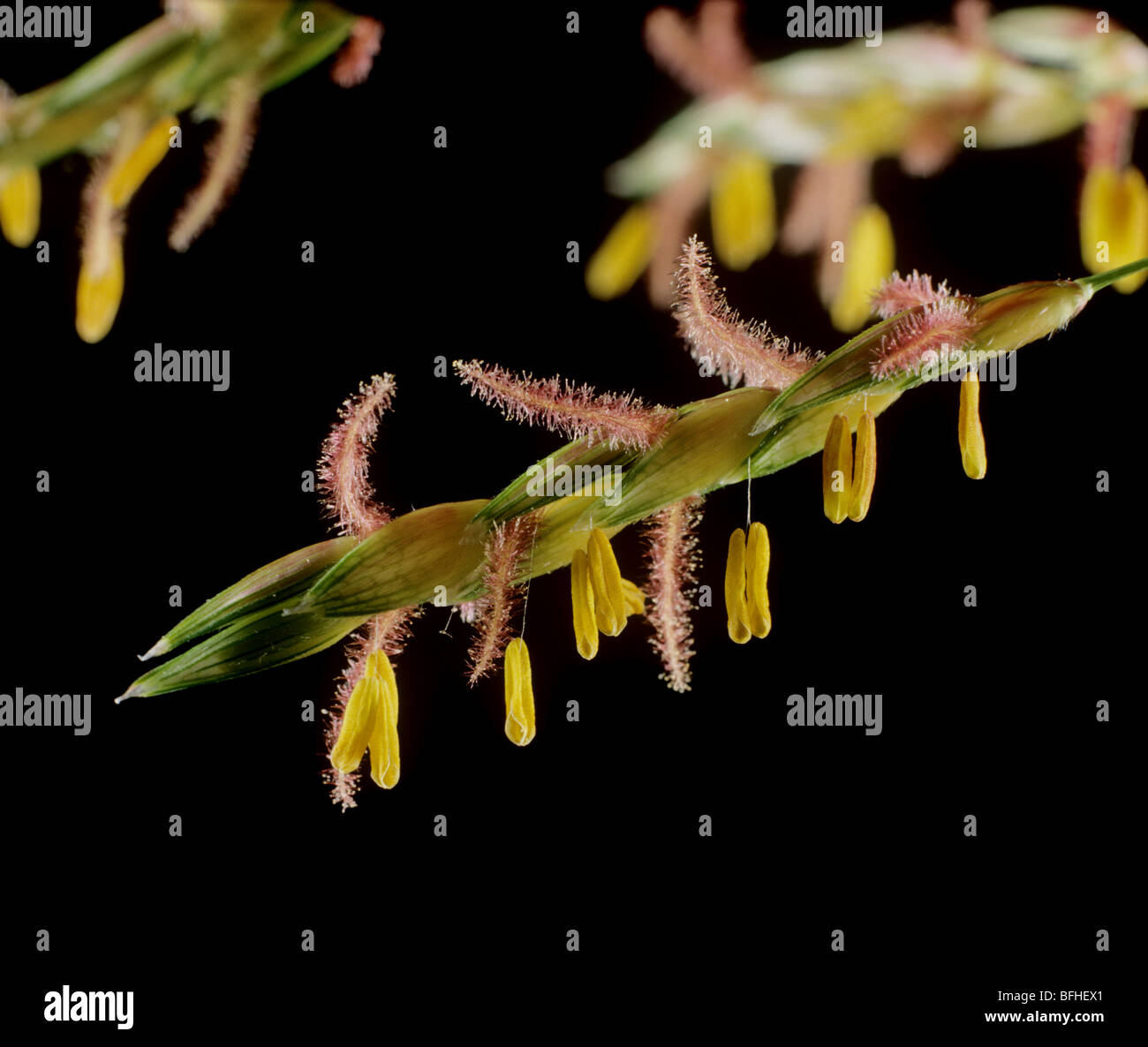
Each grass flower's yellow anthers are full of pollen and easy to see. The feathery stigmas, which catch the pollen, are tiny white flecks. Here's a detailed photo of johnsongrass flowers.

The beauty of grasses is subtle, but their gifts to people are not: grasses feed the world. Corn, plus wheat and its cousins oats, rye, and barley dominate agriculture in the U.S. Rice is the staple food of more of the world's people than any other. Millet and sorghum are the main food crops in West Africa, where I was a Peace Corps volunteer. Grasses even provide dessert: sugar cane is a grass.

Grasses have even earned their own field of study. My friend Matt Lavin teaches agrostology at the University of Montana. He shares his artful images of grasses, and other plants, on Flickr. No telling how many DQs have stopped to wonder about Matt.