Monday, March 24, 2014
Late Winter Rains and Army Cutworms
The Treasure Valley smelled of damp, warm soil. Ranchers, farmers, and water managers cheered the promise of ample irrigation water and plentiful grass. An artist used every shade from Absinthe to Wintergreen to paint the Boise Green Belt in living, photosynthesizing color.
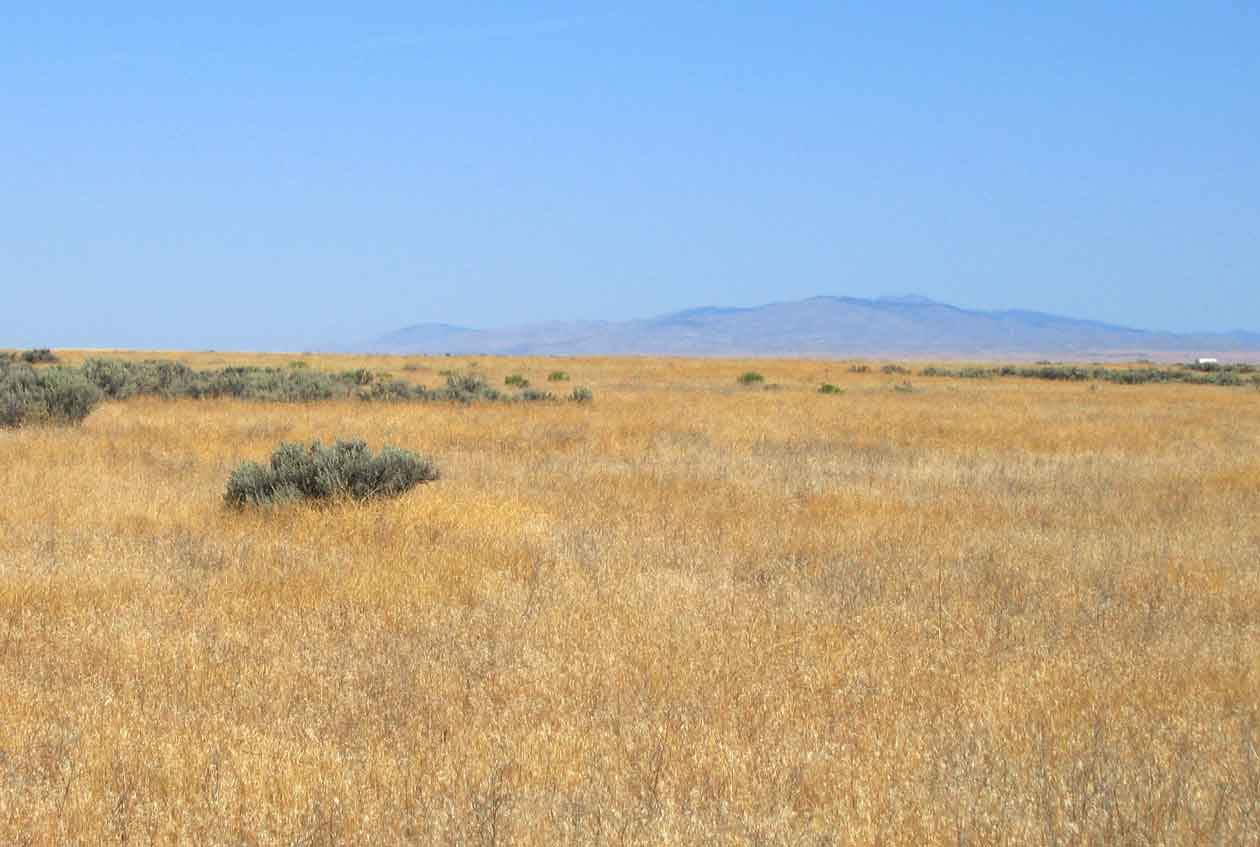
The rains couldn't save this year’s crop of cheatgrass in the dry areas along the Snake River south of Boise. Last fall, a prodigious storm germinated a flush of the winter annual grass, along with its annual mustard cousins. Sadly for the plants, their good luck didn't last. Happily for me, their subsequent misfortune confirmed an accusation I made 11 years earlier.
Clouds of miller moths returned from their summer in the mountains shortly after the rain storm. The moths laid eggs that hatched into army cutworms a month or so later. The larvae soon got down to business eating the tiny green cheatgrass and mustard plants.
The dry winter that followed was ideal for the cutworms, which are thought to develop fungal diseases in damp weather. But the cheatgrass and mustards struggled in the dry weather. The annual plants died from drought or were consumed by army cutworms. Perennial grasses, with their deeper roots, survived on the hills above areas where the annuals had died.
Hungry army cutworms roamed the bare areas looking for food...
...or hid under cowpies, during the day...
...where hungry centipedes stalked.
After the larvae consumed the annual plants, they went arboreal and climbed sagebrush...
...and fourwinged saltbush and kept eating.
Army cutworms also climbed the hills to munch on perennial Sandberg bluegrass, which seemed able to outgrow the larvae's feeding.
When they ran out of plants to eat, the cutworms dined on their fallen comrades.
This spring I caught army cutworms in the act of consuming cheatgrass and creating cheatgrass die-offs. Eleven years had passed since a rancher told me army cutworms were responsible for die-offs I saw near Winnemucca, NV in 2003, and an entomologist later described to me the conditions that allowed the larvae to explode.
Monday, December 3, 2012
Have a Cheatgrass Beer and Help the Great Basin
As an environmental researcher, Tye finds ways to manage invasive cheatgrass. In her off hours, she and her husband, Joe, are home brewers who teach others how to turn grains, hops, yeast, and water into ales, lagers, and stouts in Reno, Nevada. Tye combined her knowledge of cheatgrass with her love of brewing to come up with a way to restore cheatgrass-invaded areas while producing beer. "Every time people drink our beer, they are doing something to save their desert," she told a local news outlet.
Cheatgrass lives fast and dies young
Conservationists, ranchers, and fire fighters shudder each summer when nonnative cheatgrass dies to form a carpet of tinder.
Although native plants burn, too, cheatgrass stalks carry flames especially well. What’s more, cheatgrass has already assured its survival by the time fire season rolls around. The plants produce a bumper crop of seeds each spring--up to 65,000 per square meter--that sprout into new plants the following fall.
Our native perennial grasses and sagebrush, on the other hand, hunker down and survive the hot, dry summer as dormant live plants. Rooted in place, they can't run and are killed by fire.
When the ashes have cooled, cheatgrass seeds blow or hitch rides on fur or socks into burned areas. With the native plants dead or damaged, the uninvited guests sprout to find they're the only ones at the banquet. Cheatgrass gobbles up soil nutrients and water and produces another crop of seeds to continue the cycle.
By harvesting cheatgrass seeds each year, Tye hopes to both reduce the number of cheatgrass plants and improve conditions for our native plants. Fewer cheatgrass seeds means fewer cheatgrass plants sprouting. Repeatedly taking off the nitrogen-rich seeds for beer should gradually reduce the level of this plant nutrient in the soil.
Fast-growing cheatgrass needs lots of nitrogen to support its lifestyle. But the native plants, with their more tortoise-like approach to the race for survival, thrive in less fertile conditions. Tye will count the cheatgrass seeds and measure the soil nitrogen to know when native plants have the best chances. Then she'll reseed the area with a mix of native species.
Amber ale and more
Ira Flatow tasted Tye and Joe’s amber ale cheatgrass beer and pronounced it "delicious." Tye explained to the Science Friday host that they mix barley with the cheatgrass seeds. Barley adds an enzyme that turns starch in the seeds into sugar; cheatgrass lacks this enzyme. Once the sugar is released, yeast converts it to alcohol.
The couple isn’t satisfied with just one type of beer. Their company, Bromus Tech, is working with Lance Jergensen, an independent malster who specializes in local barleys, and Ryan Quinlan, at Great Basin Brewery, to develop several different cheatgrass beers.
Tye's ideas aren't limited to beverages. She points out that agricultural chemicals are rarely used on the wildlands that cheatgrass invades. She plans to use the spends seeds left from the brewing process to produce organic grass fed beef. You'll be able to have an organic grass-fed cheatgrass-finished burger with your cheatgrass beer.
Once they’ve perfected their line of beers and fine-tuned their restoration techniques, Tye and Joe will share their knowledge with other brewers. Tye envisions small breweries across the West harvesting local cheatgrass and producing delicious beers. "I think that Idaho cheatgrass beer would catch on like wildfire," she told Ira Flatow.
Monday, June 25, 2012
I Live in a Smile
The Snake River Plain cracks a smile across southern Idaho. It curves down from the Centennial Mountains on the east toward Nevada, then turns up northwest toward Oregon. I followed the Plain to Boise a decade ago to work as a federal ecologist, one of thousands of new Idahoans flooding the Plain and loving it to death.
The hot spot that now powers the geysers of Yellowstone poured the Plain’s foundation. As the Ice Age thawed, Lake Bonneville escaped down the Snake River. The megaflood blasted out house-sized chunks of lava and cut laugh lines into the Plain.
Serene mountains outline the edges of the smile and help me navigate unpaved roads on the sagebrush desert. My car kicks up silt that nearly matches its Champagne Gold paint.
Formed from fire and shaped by water, the Plain is dominated by wind in spring. This is when I study the effects of federal vegetation improvement projects on sage grouse habitat. In less disturbed areas, sagebrush is skirted by duvets of plush moss, attended by native grasses, and dotted with purple larkspur and lupine. In summer, yellow rabbitbrush shines. The grouse and I startle each other when I walk too close to where they hide from legal battles over the status of their species.
In more disturbed areas, ragged cheatgrass spears up among the native plants, ready to carry wildfire. The cheatgrass coalesces into scabs after fire removes the sagebrush. Much of the lower elevations have been scabbed over.Sterile green bandages of non-native wheatgrass plantings protect against the invasive cheatgrass. The plantings fade to monochrome gold in summer.
Sage grouse congregate among more recent lava flows around Craters of the Moon. The flows are impossible to plow, so settlers did not sink roots into the lava. It is tough on boots, tires, and hoofs, which leave the land to the grouse. I conclude that sage grouse would benefit from the application of more lava. The Craters operate on a longer time frame than federal funding cycles, but an eruption is due.
I worry about the Plain. The Plain cracks a smile.
Monday, April 9, 2012
Carbon Sequestration in Sagebrush Steppe
This grass was able to invade after the native vegetation was killed by the fires that splash blackened smudges across the area most summers. Green for only a few weeks in spring, cheatgrass spends most of its life as a blanket of short, brown stems, leaves, and bristled seeds. The seeds attach to your socks and work their way down into your boots. They use their travelling tricks to spread into other areas where the native plants have been killed or weakened, where they take root.
My friends had lived in Boise long enough that they remembered when the trip east out of Boise was lush with a shrub forest of sagebrush, tall native bunchgrasses, and evanescent wildflowers in spring. The varied plants wove a tapestry of different shades of green that woke up from winter in waves: first the bluegrass, then the squirrel tail, then the needlegrass and wheatgrass filled the areas between the shrubs. The forbs took turns showing off.
Some years the balsamroot astonished my friends with washes of yellow across the hills. Other years the lupines gave it their all and created a pointillist painting with touches of blue. On some trips the red paintbrushes shone and other times it was the yellow ones.
My friends lived next door to each other and worked together for years; they knew each other's stories. But the sagebrush and grasses and wildflowers spun them a new tale each time they traveled to Mountain Home and beyond.
In addition to entertaining my friends, the native sagebrush vegetation also did a far better job of capturing and sequestering carbon dioxide than the carpet of cheatgrass now does. The Big Ugly contains much less carbon in its soil than it did previously, researchers from Boise State University have found.
You can learn more about the study in a piece I wrote for BSU’s Division of Research and Economic Development.
Thursday, April 5, 2012
Rare Idaho Wildflower Gets National Coverage
Christ’s paintbrush, which only grows in one small area, is an unusual kind of hybrid plant. In her Master’s degree research at Boise State University, Danielle Clay found that it is a homoploid hybrid. Although closely related plant species often cross breed, they rarely produce new homoploid hybrid species.
Many hybrid offspring have two sets of chromosomes, one from each parent. But homoploid hybrid offspring end up with just one set and so have the same number of chromosomes as both of their parents. This usually results in homoploid hybrid offspring crossing back with one or both of their parental species until their unique genome disappears. But occasionally, as with Christ's paintbrush, homoploid hybrid offspring are so different from both of their parental species that they cannot cross breed and a new homoploid hybrid species can develop.
After I wrote about Danielle’s work for BSU’s Division of Research and Economic Development, the university allowed us to reprint the piece, with Danielle’s photos, in the Idaho Native Plant Society's newsletter. he Forest Service saw the article and BSU gave the agency permission to use the story and photos from the INPS newsletter on their website.
Celebrating and Learning about Wildflowers
While Christ’s paintbrush boasts a unique origin, all paintbrushes are unusual plants. We talk about their red, yellow, pink, or purple flowers, but what we really see are the colorful flower bracts that nearly hide the tiny, green flowers.
If we looked at the roots of one of these plant under a microscope, we would see finger-like structures called haustoria. Paintbrushes use these to tap into the roots of other plants to obtain water and minerals. These colorful wildflowers are not true parasites because they have green leaves that produce food through photosynthesis; paintbrushes are called hemiparasites, or partial parasites. This is why we find them sprinkled across landscapes like paprika and growing next to other plants, such as the sagebrush in the photograph.The Celebrating Wildflowers website introduces Mycotrophic Wildflowers. These are true parasites, as they have no chlorophyll. This frees them from the green color scheme of most other plants and lets them explore other options. For instance, Indian pipe, or ghost plant, is a translucent, ghostly white. This unusual plant was Emily Dickinson's favorite flower.
Unlike most true parasites, mycotrophic plants do not get food and water directly from other plants. Instead, they tap into the mycorrhizal fungi that coat the roots of many plants. The fungi, with their masses of tiny filaments, or mycelia, help the plants absorb soil water and minerals, especially phosphorus. The plants return the favor by providing the fungi with food produced by their photosynthesizing leaves.
If Emily Dickinson had known how Indian pipe obtains its food, I believe she would have been even more impressed with this plant.