Showing posts with label Farming. Show all posts

Monday, April 1, 2024

Windfall, by Erika Bolstad: Tragic, disheartening, and encouraging

Many of us struggle with the knowledge that our actions are hastening global climate change. As an environmental journalist, Erika Bolstad’s angst ratcheted up when she learned that her mother’s family was benefiting from an oil lease. The news of the windfall was intertwined with a mystery: how had her mother’s grandmother homesteaded the land and what had happened to her? 

Cover of Windfall, by Erika Bolstad
Bolstad learns more about her family while following North Dakota's oil boom and bust. She weaves her family’s history, and her and her husband’s longing for a child, with her coverage of climate change, fracking, and methane flaring. The interweaving keeps visits with U.S. Geological Survey and university researchers, and oil company employees, from becoming boring, and the personal stories of fertility challenges and multi-generational mental health struggles from becoming (overly) heartbreaking. 

Bolstad wonders if her family should profit from an oil boom where workers, chasing windfalls, risk their lives to extract oil that makes billions of dollars for others. She fantasizes about interviewing one of wealthiest oil company owners and asking him, “[W]hen he first understood the world was his for the taking. How did he learn that the rules weren’t for him or anyone like him?...[W]hy he thought he deserved to amass an $11.3 billion fortune when people were living in their cars in a Walmart parking lot, and in church basements and in housing next to his soil field, just so they’d have a crack at a few crumbs of the American dream.” 

Bolstad makes an admirable and kind decision about her family’s oil lease. The stories she tells in Windfall are, at times, tragic and disheartening, but her response is encouraging.

Friday, April 5, 2019

Hunting the ancient agave

Agaves spend much of their lives as toothy, spikey plants we avoid while hiking. Most agaves bloom only once, throwing their heart and carbohydrates into raising an exorbitant stalk of fragrant flowers that ripen into dry fruits stacked with flat, black seeds. We're captivated by the transformation from spikey to florescent.

Wendy Hodgson makes agave seeds fly in Cascabel.
However, for over 8,000 years, people have harvested agaves just before flowering, usurping the carbohydrates in the stem for human food and beverage. The leaves also provide fibers for rope, baskets, bags and sandals.

Although people have used agaves continuously in Mexico, the plants' cultivation and culture faded from what is now Arizona by the 18th century. Residents of the Middle San Pedro Valley have periodically wondered if we could grow agave in our area. After all, Sobaipuri Native American agave fields dot our community, and wild agaves grow in the valley.

When this question came up again last winter, we learned that survivors of pre-Columbian cultivated agave had recently been found in our area. Wendy Hodgson and her colleague Andrew Salywon, both with the Desert Botanical Garden, named the new species Agave sanpedroensis. Wendy and Andrew even suggested that this low-water-use crop could be revived to diversify agriculture and stimulate new industries in the U.S. Southwest.

Agave sanpedroensis.
We contacted Wendy, who was as eager as we were to connect. In January 2019, she told a packed Cascabel Community Center about the eight (and counting) species of formerly cultivated agaves she and her colleagues have found. In February, dozens of people braved blustery weather on a follow-up field trip. Wendy explained how she recognizes the different species of agaves and outlined how we can help her survey the plants in our valley.

Wendy and Andrew work with archaeologists, who have documented extensive agave fields at many sites in central and southern Arizona. Rows of rocks along contour lines slowed runoff across the fields and rock mulch piles reduced evaporation. Near the fields, archaeologists find knives used for removing leaves and roasting pits where agave stems, or "heads," were baked to sweetness.

The plants we see today are genetically identical to those the Sobaipuri and other groups developed to suit their needs. Unlike their wild relatives, these cultivated agaves produce little or no seed. Instead, the plants reproduce vegetatively, usually by pupping, to produce offspring identical to the parent. Cultivated agaves are also sweeter than their wild relatives and their leaves are easier to cut.

After surviving drought, insects, and rodents for centuries--or millennia--climate change and development threaten these rare plants. As cultivated crops, they fall into a protection gap: the Endangered Species Act protects only wild species and the Archaeological Resources Protection Act protects only inanimate artifacts.

Wendy fears that these recently discovered, living storehouses of information on people, culture, and plants could be lost. She is helping residents of the Middle San Pedro Valley learn about the ancient agaves in their area and work to protect them.

Thursday, September 20, 2018

An entomological who dunnit

Jeff Lockwood's book, Locust: The Devastating Rise and Mysterious Disappearance of the Insect That Shaped the American Frontier is available on Amazon, where I reviewed it.

Scientific understanding usually shuffles along in the two-to-three-year steps of graduate student research projects. Big, intriguing mysteries take longer to resolve, but are more fun to research—and more interesting to read about.

Jeff Lockwood tackled the mystery of why the Rocky Mountain locust went extinct at the dawn of the 20th century. The species' periodic irruptions rivaled the bison in terms of biomass and the 1875 outbreak still horrifies young readers of Laura Ingles Wilder's, On the Banks of Plum Creek. Then the insects disappeared.

In his book, Lockwood recounts the challenges of sleuthing out a big mystery. Big research projects require new research techniques and years of soul-crushing work counting, dissecting, measuring, and recording data. Papers describing new research findings are sometimes rejected by academic journals; colleagues sometimes snicker. Unearthing the Rocky Mountain locust's secrets required field work at remote high elevation "grasshopper glaciers" reached by difficult climbs in foul weather.

Big research projects need lots of brains and lots of backs. Lockwood doesn't hog the limelight; he credits his employees, students, and colleagues for their inventions and insights. Field research is carried out by people, so it's a social activity, which Lockwood captures. A twenty-five-mile hike, completed in the dark, isn't quite as bad when you're not suffering alone, and joy shared at discovery is joy multiplied.

Other ecological changes in the late 19th century might have been linked with the locust's disappearance: decline of the bison, changes in climate, or reduced burning by Native Americans. Lockwood guides readers through the possibilities and explains why he rejects each. He focuses instead on the ecological bottleneck of limited egg-laying sites in valleys of the northern Rocky Mountains. Lockwood determines that when settlers plowed and grazed these areas, they destroyed the locust's eggs, and with them, the species. The culprit was settlers, in valleys, with plows, by accident.

Although the Rocky Mountain locust's sky-filling swarms are gone with the thundering bison herds, Lockwood ends his book by wondering if a few individuals may live incognito in less disturbed valleys of the Rockies. Another big, intriguing mystery.

Monday, September 26, 2016

Local land trust helps Swift River Farm grow in Salmon, Idaho

Local food used to be the only food in rural central Idaho. People living in isolated mountain valleys grew and shared most of what they ate. When paved roads and trucks arrived to stock grocery store shelves, residents shopped more and farmed less.

Jessica McAllese and Jeremey Shreve are (re)creating local food networks in Salmon, Idaho. The couple settled in the Lemhi County town in 2013 with a border collie named Nora, a tractor named Fergie, and years of experience farming in Pocatello.

Salmon has been fertile ground for Shreve and McAllese’s Swift River Farm. Other small farmers, a local foods group, and a farmers market are reviving small scale production and distribution systems.


Ranchers started the Lemhi Regional Land Trust to protect local landscapes and rural lifestyles. The trust found a way to help McAllese and Shreve buy land to expand their farm and build a home together.

I told the Swift River Farm story in the Summer issue of Edible Idaho.

Thursday, May 12, 2016

The vineyard is a-LIVE

Vineyards are evocative, pastoral landscapes that invite visitors to linger and relax with a glass of wine. These agricultural fields can be more or less environmentally friendly, depending on how they are managed. Bitner Vineyards is the first and, so far, only Low Input Viticulture and Enology (LIVE) certified vineyard in Idaho.

Ron and Mary Bitner use science-based practices to protect water, soil, and pollinators. The couple provide habitat for pollinators and use cover crops, integrated pest management (IPM) techniques, and biological control methods to reduce their use of pesticides. Embracing science comes naturally for Ron Bitner--his first career took him around the world as an expert on leafcutter bees for pollinating alfalfa.

I wrote about the Bitner’s LIVE vineyard in the Spring issue of Edible Idaho.

Sunday, October 4, 2015

Hop harvest

The hop yards of southwestern Idaho are growing quiet and empty. The walls of hops are falling as workers cut and gather the lanky plants. Unpaved roads wave dust plumes behind the trucks that carry the plants to the hop-pickers and -driers that rattle and hum day and night in the farm fields around Wilder, ID.

Wrangling the tall plants takes special equipment. This short video shows how the Obendorf Hop Farm first clips the bottoms of the plants and then pulls them down and gathers them into a truck.
My story in last fall’s Edible Idaho describes the action at the picker/drier and shows how the hop fields of Wilder have changed with the popularity of hoppy craft beers. An earlier blog post shows how workers install twine for the young hop plants to climb in spring.

Thursday, July 2, 2015

Three degrees, no garlic scapes

In three agriculture degrees, several botany classes, and decades as a plant ecologist, I never ran into garlic scapes. I know and use terms such as “homoploid hybrid species” and “Pseudotsuga menziesii.” But, until last Saturday, I’d never met a garlic scape.

Jessica and Jeremy of Swift River Farm introduced me to the curvy, green flower shoots at their booth at the Lemhi County Farmers Market in Salmon, Idaho. The couple, who also sell subscription shares in their farm’s produce, spun an improbable tale of sex and scapes.

Long before humans began sautéing cloves or warding off vampires with the heads, garlic dispensed with seed. The plants gave up sex. Each of these Shakers of the plant world eschewed others of its kind and simply produced garlic heads that grew into plants that produced garlic heads.

Jeremy and Jessica embrace garlic’s celibacy and plant individual cloves, which grow into plants that produce full heads. Each plant is genetically identical to its single parent, which is identical to its single parent, and so on back through time.

Oddly, some kinds of garlic still produce flowers, as if trying to blend in with the rest of the plant world. While other plants produce flowers with male and female parts that swap genes with the opposite flower parts to form seeds, garlic flowers form bulbils. Bulbils look like tiny cloves and grow into plants identical to their parent.

The scapes I discovered at the market are garlic flower stalks with developing bulbils. I cut open one of the largest developing flower clusters.


I’ve also learned there are two kinds of garlic: soft neck and hard neck. The garlic in grocery stores is the former, as it stores well enough to keep the produce bins stocked all year. I might be excused my garlic-scape ignorance, as they are only produced by hard neck garlic. These types are grown in cooler climates and usually consumed locally, as they don’t store well.

My new friends, the garlic scapes, gave me the perfect excuse to skip my usual toast-and-yogurt breakfast and linger over an omelet-and-garlic-scape-potato Sunday brunch.

Saturday, June 27, 2015

Smooth Brome in Full Glorious Bloom

In Salmon, Idaho, the springtime blues of lilac and larkspur are fading to yellow sunflower, mullein, and mum. Their colors echo the intensifying sun, as it pauses to catch its breath before marching south again. The gardens bursting with blooms catch our eye and make it easy to overlook the grasses. Although many people don’t think of them as “flowering plants,” bromes and bluegrasses bust out with intricate, usually overlooked, flowers.

A pickup truck stopped while I was photographing smooth brome flowers on a late spring morning. The passenger-side window motored down and the designated questioner asked if I had found a fawn. “No,” I said, “I’m photographing the bromegrass in full, glorious bloom. Who could resist?” DQ smiled through his snort. “I could.” The designated driver drove on.


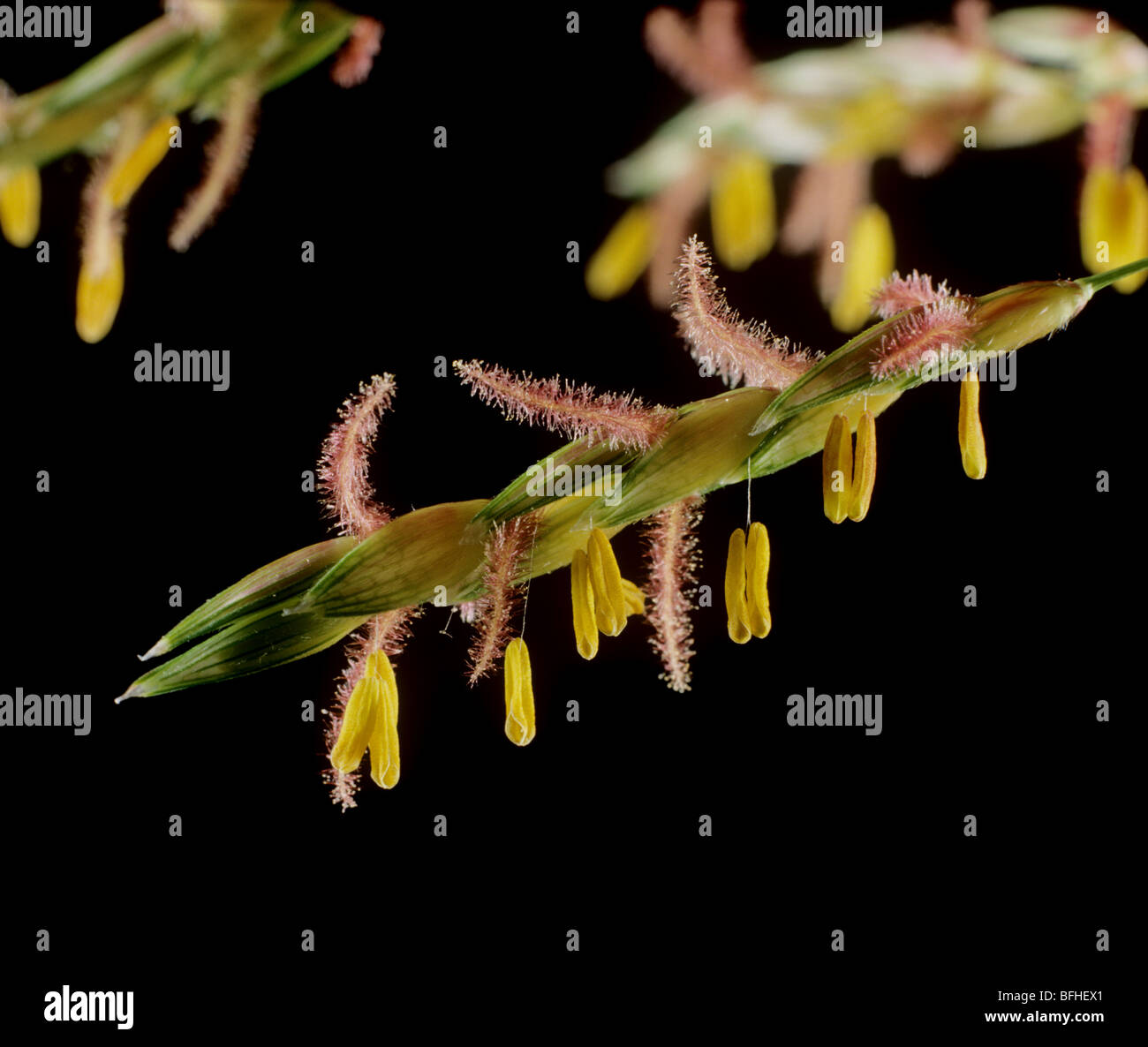
Each grass flower's yellow anthers are full of pollen and easy to see. The feathery stigmas, which catch the pollen, are tiny white flecks. Here's a detailed photo of johnsongrass flowers.

The beauty of grasses is subtle, but their gifts to people are not: grasses feed the world. Corn, plus wheat and its cousins oats, rye, and barley dominate agriculture in the U.S. Rice is the staple food of more of the world's people than any other. Millet and sorghum are the main food crops in West Africa, where I was a Peace Corps volunteer. Grasses even provide dessert: sugar cane is a grass.

Grasses have even earned their own field of study. My friend Matt Lavin teaches agrostology at the University of Montana. He shares his artful images of grasses, and other plants, on Flickr. No telling how many DQs have stopped to wonder about Matt.

Saturday, May 16, 2015

Stringing Hops

While Midwest corn and soybean farmers waited for April’s muddy fields to dry for planting, southwest Idaho hop growers were already helping their crop reach for the sun. Corn and soybeans grow from tiny seeds each spring. Hop plants get a jump on the season by resprouting from sturdy roots.
As the first lobed and toothed leaves appear, sticky hairs on the stems attach to anything they can find to stretch toward the sky. Commercial hop growers in the Greenleaf-Wilder area of Idaho provide trellises and twine nearly 20 feet tall.

This is one of only four places in the U.S. where the crop is grown commercially. You might be tempted to call these champion climbers, “vines,” but botanists call them “bines.” Vines grip with curling tendrils; bines use stiff hairs.

This April, workers at Jackson Hop Farm rode across the hop yards while standing on a platform a dozen feet above the ground. A tractor pulled the contraption perpendicular to overhead wires that stretch among sturdy posts. As the tractor passed under a wire, five men on the platform each picked up a 20-foot long piece of twine from a supply hanging over the partition in front of him. Then five thickly-gloved hands executed a flip and a twist with a tuck and the end of the twine was tied to the wire.
Occasionally, one of the men missed his dally. A shout from the platform would stop the tractor and back it up for another loop.

The platform cowboys weren’t the only ones wrangling hops. A ground team flowed in the wake of the tractor and tacked the other end of the twine to the ground.
As a left hand caught a swaying twine, a right hand aimed a driver loaded with an M-shaped metal clip.
Catch-point-set-step-push and another family of glossy new leaves had a home to grow on.
(This is a brand new hop yard, established just this past winter. Red straws marked the spot where each cluster of roots was to be buried.)
The crew will be back during May to teach the bines to climb, clockwise, to the top of the trellis. Hop plants only make right turns and always follow the clock.

By mid-June the plants will be nearing the tops of the trellises.
At harvest, long hallways of broad green leaves will be festooned with lighter green cones oozing with hoppy goodness.

I wrote about the fragrant harvest in the Fall issue of Edible Idaho.

Sunday, February 8, 2015

Red, not Golden, Walnuts

California, home to fruits, nuts, and the world’s largest artichoke, lays claim to walnuts. The claim is based on the state's rank as the world’s largest producer of the golden nuts. California exports millions of pounds of shelled and in-the-shell walnuts each year, perhaps even to the forests of southwestern Asia where the trees are native.

Idaho, home to sagebrush, spuds, and the world’s largest beagle, boasts two trees that produce red walnuts. Inside normal-looking walnut shells nestle red-seed coated nutmeats that are creamier and milder than their golden-coated cousins.

When I visited the two trees late last summer, their unusual nuts were cleverly disguised as regular green walnut fruits.

Idaho’s red walnuts are descendants of a single tree in Europe, where the unusual nuts have been rediscovered and renamed many times. Recent converts rave about the nuts in online discussion boards and ask others for more information on the trees. Others respond with reminiscences and reminders on the virtues of sharing.

A researcher in Austria is an admirer of the ruddy-skinned nuts. His Flicker photostream show a range of colors, from pink to burgundy to deep violet. He has a red-seeded walnut tree in his garden and research into the genetics of the rare nuts on his bucket list.

I wrote about Idaho’s red walnut trees in the Winter issue of Edible Idaho.

Saturday, January 4, 2014

2013 Sugar Beet Harvest was a Challenging One

Metal dinosaurs come to life each fall across southern Idaho. Joints flex and belts whir to life at rural crossroads from Blackfoot to Nampa. Convoys of trucks unload sugar beets into the clanking creatures through the short fall days and into headlight-filled nights. 
The beet dragons arrange the roots into tidy piles that demonstrate betaine physics in their angle of repose.
Trucks shoulder past each other on the narrow roads between the “beet dumps” and the fleets of harvesters in the fields.
Each harvester is attended by a bevy of trucks waiting their turn for a high horsepower, high volume pas de deux across the corduroy soil. As one truck is filled and peels off, another smoothly cuts in to take its place.
When the beet fields are empty and the dumps are full, larger trucks carry the beets, which look like sturdy, white garden beets, to processing plants. The plants extract from the lumpily pyramid-shaped roots the granulated white sugar we use in cooking. Livestock eat the high fiber beet pulp that is left.
In 2013, Idaho sugar beet growers produced record high yields, but were hit by a double whammy of low sugar content in the beets and low prices for the crop. I wrote about the challenges of this year’s harvest in a recent issue of the Intermountain Farm & Ranch section of the Idaho Falls Post Register. Growers hope that new higher-sugar beet varieties and careful management will boost sugar contents, and profits, next season.

Tuesday, October 1, 2013

Solar Dairy

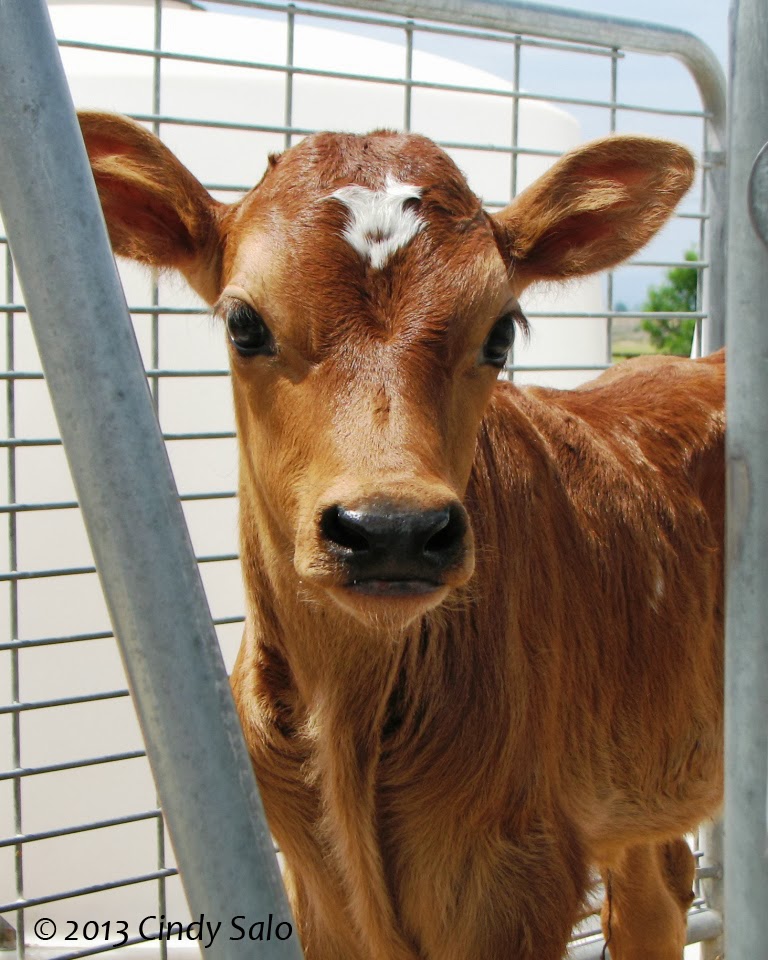
Cheese is protein-filled and delicious. Concentrating the goodness of milk into cheddars, Gouda, and Halloumi takes energy. Ballard Family Dairy and Cheese is using solar thermal energy, and other energy upgrades, to turn Jersey milk into irresistible, prize-winning cheeses. Learn more in my story, Sunnyside of Cheesemaking, in the Fall issue of Edible Idaho.


Thursday, August 29, 2013

Echoes of My Grandmother's Garden

The sign said, "Please ring the bell." I reached for the cord and was seven again.


My two brothers and I had just escaped from the car where we had spent two days tormenting each other with words and looks. Six fugitive feet thumped the slate stones around our grandmother's porch and past the well to the dinner bell waiting on a metal pole next to her garden. We took turns pulling the thick wire and filling the garden with sound. We pulled to announce our arrival, we rang for the joyful noise of it, and we sounded a greeting to our cousins on the next farm.

My turn peeled across the wheat field, around the corner of the hen house, among the black walnuts in the woods, over the backs of the cows in the lane, and across the wooden bridge at the creek, which might have sheltered trolls. I let go of the wire and the tones slowed, softened to silence.

I hadn’t rung a dinner bell since that summer, when we spent six weeks on our grandmother’s farm while our dad went to summer school.


The bell that invited me to ring it this time perched on a wooden tower in a campground two thousand miles and many decades from my grandmother’s farm. I looked up at it through red geraniums, white alyssum, and blue trailing lobelia. U.S. and Washington state flags spread from opposite sides of the tower like wings.

This time, my peels disappeared into the s forest that threatened to swallow the campground. My hands itched to pull the cord again and again. I wanted to punch through the trees and bounce the sound off the trunks of the Doug fir and Sitka spruce, let it echo across hollow clear cuts, and send it cascading down the rocky gorge of the Little North River nearby. I overpowered the seven year old in me after two rings and forced my fingers to release the cord.

Long before I had an excuse to reach for the cord again, a woman in jeans a size I haven’t squeezed into since high school walked briskly around the corner of the bell tower. She wore a bucket around her neck made from a restaurant-sized tin can with holes in it for a string. Raspberries filled a third of the can and pulsed with sugar pumped into them by the summer sun.

"I’m glad you rang the bell," she said. "I was in the garden."

Ann introduced herself and opened the office. She told me that she and her husband shared the bounty of their large garden with guests. The blueberries weren’t quite ripe, but the raspberries were at their peak, and many kinds of greens were ready. Greens? I needed greens!


I had escaped Boise’s 100-degree bright summer for camping and hiking in the dripping moss and fairy tale fog of the Olympic Peninsula. Headed south on the coast highway, I struggled to keep my eyelids open against the pressure of a lumberjack-sized lunch. I squinted at the Washington atlas and saw an RV Park hugging the road in Artic, the town named through poor penmanship: the founder meant to name the place after his wife, "Arta," but a clerk misread his writing.

I sighed and heaved the atlas back onto the passenger seat. I’d been welcome in Olympic National Park, but private RV parks rarely allow tenters. The ones that do, banish fabric accommodations out of sight in the noisiest, muddiest/dustiest corner, closest to the highway or nestled in the corner where truckers unleash their Jake brakes. The manager of a park in Oregon told me why: "Our RVers don’t like tenters.”


I started camping when RVs were as rare as showers in a Forest Service campground. Our parents took us to Interstate State Park, near our home in Minneapolis. I was enchanted by the stiff, musty canvas pup tent our dad set up in the back yard for a trial run. Two end poles kept most of the heavy tent from collapsing, with the help of a tangle of oily jute ropes and muddy wooden stakes with flat mushroom tops.

As I ran on the trails and jumped in and out of the potholes at the state park, I dreamed about sleeping that night in the tent. I could hear the wind shaking the stiff canvas and smell the oily fabric. My first night outdoors! But our dad made up beds for my younger brother and me in the car. In the car? That wasn’t sleeping outside! I’d been in a car before. I salve that childhood disappointment every time I set up my tent or shake out my sleeping bag or on a sandy beach during a river trip.


I glanced halfheartedly at the Artic Park sign as I passed. So halfheartedly that I couldn’t read it all before it disappeared behind me. On my second pass, I read "Tenting" and "Bicyclers welcome" at the bottom. I pulled in and walked to the office. Next to the office was a bell tower.


As Ann told me about the park and garden, a grizzled Garrison Keillor lookalike came in. She introduced her husband, Roy, who seconded Ann’s welcome. I asked about the squirrel dashing up and down trees, slashing its tail and jabbering at me as if I’d parked in his spot. Roy said it was a Douglas squirrel; the two of them were on opposite sides of the War of the Bird Feeders.

Ann showed me the garden and invited me to pick a bowl of raspberries for my breakfast. She assured me she hadn’t gotten them all. “Everyone’s at a different height so they see different berries. But please leave the Cascade berries; we use them for wine.” I was welcome to Swiss chard, lettuce, and kale, plus oregano, fennel, and something lemony from the herb garden. "Anything but the foxglove," Ann summed up.


My grandmother’s garden stretched from the dinner bell to the field that was in wheat the year we stayed six weeks. My young eyes could hardly imagine an end to the garden. I wanted to dig my toes into the damp soil under the scratchy straw, but Grandmother kept the rows of tomatoes, green beans, carrots, lettuce, strawberries, and asparagus firmly mulched.

Gladiolas next to the fence by the hen house were the only nonedible crop. I can still see her walking into Quaker meeting, her determined stride, leaning forward slightly, with a slight hitch of age, carrying a sturdy blue vase of "glads.”

We kids didn’t know what good food was. Vegetables and greens were obstacles to consume so we could go back to playing with the toad in the back yard, messing around at the creek, or watching the hogs in the barn lot. Home-canned morels were weird looking and gross. Lucky for us, our dad didn’t trust his mother-in-law's skill at identifying ascomycetes: he didn’t want us eating those things. My mother and grandmother didn’t argue; they served themselves a few more.


In Ann and Roy’s garden, I picked a grocery bag full of greens and herbs, plus a bowl of raspberries for breakfast (berries consumed while picking not shown). A net bag made a great camp salad spinner. I added sliced baby carrots, olive oil, and lime juice for the perfect antidote to a lumberjack lunch. A beer catalyst brought complete recovery.


I was writing in my camp chair at dusk when a white truck pulled a trailer past my site and circled around to an empty spot. A man got out and walked to the office. A moment later, the dinner bell rang.


Roy walked over from the house to check the man in. In a splash of light near the bell tower, the men talked about traveling, trailers, and trucks. They talked so long that a girl, a little older than I was when I rang my grandmother’s bell, left the trailer and walked to the office.

She waited for a break in the conversation to ask, "Can I ring the bell?"

“Sure,” said Roy.

The sound spiraled up from the bell tower to the Douglas squirrel’s nest. He lifted his head, listened, then tucked his nose under his tail and went back to sleep. The sound bounced across the berry canes, the salad greens, and the herb garden to the forest. The trees didn’t notice the sound, but I did. She rang for both of us when she pulled the cord again and again.

As I got ready for bed, an invisible orchestra of crickets scratched away under a Milky Way I see so infrequently that it always astonishes me. I zipped into my sleeping bag and thought about the fresh raspberries waiting for me in the cooler.

I hope that girl has a grandmother with a dinner bell in her backyard and a farm with a creek beyond the garden. Or was that the first real bell she’d heard among the electronic beeps that crowd, fill, deafen, clang, bang, her life? Would she pick berries and greens in the garden the next day? Or does she only eat food from the grocery store?

I wonder if the girl longed to leave the trailer and sleep in a tent as much as I did on my first camping trip. Will she find the same magic in sleeping outdoors that I do? When I set up my tent for the last time, I hope she'll be doing the same thing somewhere, and thinking about her journey from joyous bell ringer to confident camper.

_________

Note: In telling this story, I combined two conversations into one, to improve the flow.

Friday, July 5, 2013

Why Did the Chickens Cross the Pasture?

To let the vegetation regrow, reduce parasites and disease, spread nutrients evenly, and to find more plants and insects to eat.

The chickens crossed the pasture in a travel trailer.

I visited Malheur River Meats’ ranch while they were moving their chickens recently. Their flock of laying hens and attending roosters live in remodeled trailers. I’ve lived in something similar, but it still had appliances and furniture.


The chickens can’t move on their own; they need some help: First, pull the T posts at each corner of their current pasture. It’s easiest to use a chain on the bucket of the tractor.


See this line of fence? As you walk down it, pull each of the white fence posts out of the ground. Lay each post, and the attached woven electric fence, on the ground as you go.


When you get to the end, grab the last post and walk toward the chicken's new pasture. Once the fences are in the right places, hook the tractor to the trailer and drive off. If the door swings open and chickens start popping out, ask the photographer to run over and shut the door.


Be careful as you drive over the prone fence.

In the chickens' new pasture, stop on a level spot and unhook the tractor.


Don't forget to go back for the escaped chickens, which are outside the new pasture. They won’t cross the prone fence, so have the tallest person hold it up so everyone else can chase the chickens underneath. You’ll need at least one person per chicken.


Complete the job by reassembling the fence. Remember to reattach the electrical connectors at each corner, so an electrified fence is more than just a good idea.

When the fence is complete, open the trailer door and stand back from the explosion of red, grey, white, and black hens. Soon, they’ll be laying brown, green, tan, and white eggs at their new home. See a video of the action here.

The chickens seem pleased with their new digs; how does the pasture feel about the roving chickens?

Lisa Burke, one half of the Farming Engineers in Kirklin, Indiana found the answer on Google Earth. The current image of their farm was taken in early spring, before the pasture greened up. But the chickens' travels the previous summer show as a chain of vigorously growing green patches.


The chickens, and their supplemental feed, add nutrients to the soil, but I suspect something else is going on, too. I wonder if the chickens’ scratching could have roughed the soil surface enough that it warmed more quickly than the other areas.

How do you think the chickens painted green patches on the pasture?

Monday, June 17, 2013

Modern Pastoralists use Goats to Reduce Weeds and Fire

Tim and Lynda Linquist are using an old technique to solve modern problems. The couple’s business, We Rent Goats, employs one of the oldest domesticated animals. Their goats are an environmentally friendly way to remove weeds and brush, and reduce fire hazards.

The Linquists set up woven electric fences, and then deliver goats and burly white guard dogs that protect the herd from coyotes and stray dogs. They check on the animals often and are only a phone call away if there are problems. Landowners pay from $350 to $600 an acre for a one-time treatment. The cost depends on the complexity of the fencing required, the vegetation on the site, and transportation costs. The entertainment provided by the goats is free.

The rental goats are minimizing the fire danger in several Boise foothills neighborhoods this spring. Colten Tippetts, Town Manager at Hidden Springs, uses the goats on slopes too steep for mowers and brush cutters. The animals also fit in with the rural focus of the planned community.

The Idaho Transportation Department is using the goats for the first time this year to mow around stormwater retention basins. Shawn Strong, with ITD’s southwest Idaho vegetation crew, said the goats control weeds without the risk of herbicides getting into waterways.

Later in the summer, the herds will remove rush skeleton weed in some of the City of Boise’s foothills reserves. “We usually get good response from the public to the goats, because people enjoy watching them. Herbicide application freaks more people out than goats do,” said Julia Grant, Boise’s Foothills and Open Space Manager. Grant added that, despite warning signs on the low-voltage fence, people can get a shock, especially if they’re unlucky enough to fall onto the fence.

In addition to removing an invasive weed, the goats reduce fire danger. “Weeds are problem number one, but fire and weeds are so intertwined,” Grant said. Weeds allow fire to spread and then often sprout in burned areas before the native plants can recover.

After the weed and fire seasons are over, the Linquists’ goats spend the fall cleaning up alfalfa and organic hops fields. Then the goats have a few months off before they start kidding in late March. By May, the growing kids are ready to go to work with their mothers and the cycle starts again.

When Lynda, 28, and Tim, 36, met, they discovered a shared love for goats. Lynda’s pet goat William went everywhere with her and rode shotgun in her Jeep. Tim had started with 25 goats on his five acres near Wilder, Idaho. He saw a business opportunity when a friend in California wanted brush cleared from his land: Tim increased his herd to 200 and put them all to work.

The couple brought the goats back to Wilder in December 2009. That year, they were all due to kid early. Tim remembered, “I didn’t think it was going to be that bad; we had kidded goats before, but not in the snow and not that many. We were in for an education.” Lynda added, “We had a hard freeze first thing. If we didn’t get the babies into the barn under a heat lamp, they would freeze to the ground within 15 minutes.”

Tim’s job kept him on the road four or five days a week. That left Lynda, who had job closer to home, in charge of the 200 mothers-to-be. Early in 2010, Tim had used up all his vacation time and realized that weed-eating goats were a full time business. He quit his job at the end of April. “It was the best decision I ever made, after marrying Lynda,” he said.

Lynda, the president of We Rent Goats, participated in Boise’s MicroEnterprise Training and Assistance (META) program. This nonprofit helps women, new Americans, minorities, and other low- to moderate-income entrepreneurs in southwest and south central Idaho. META’s business classes and coaching have been a big help to the new business owners. “I had to learn everything,” Lynda said. “They helped me write a business plan, I learned to use accounting software--everything. And I was a psych major.”

The Linquists have adopted the nomadic lifestyle of many herders before them. The couple gave up their home in Wilder for a fifth wheel travel trailer, which lets them stay near their animals on their yearly circuit of open space, waterways, and agricultural fields. The first two years on the road were challenging. “We were goat ranchers, but we had to learn about portable fencing and being a mobile goat operation. We’re fencing experts now,” Lynda said.

As their client list grows, Tim and Lynda are increasing their herd. They keep the best females for breeding and sell the rest, plus the young males, for meat. The animals are raised humanely and certified as Animal Welfare Approved.

We Rent Goats needs to add people, too. They hire one or two summer employees every year, but they need more if they’re going to continue to grow. As Tim pointed out, though, it takes a special person to care for the goats properly, work with the dogs, and travel constantly. Acquiring land is the biggest challenge most new ranchers and farmers face. “We need a home base, someplace for the does to kid; a place to land if anything happens,” Tim said. Even agricultural lenders are surprised by the couple’s business model. While feed is a major expense for most livestock operations, the Linquists’ goats are paid to eat. “People can’t believe how low our feed costs are, especially now with hay being $200 a ton,” Tim explained.

Until they buy land, Lynda and Tim spend the off-season with their goats on empty patches of land near Boise. They find that bringing a herd of goats with them opens doors, as most people fall in love with the engaging animals. Being around the herd has a soothing effect on people and seems to bring back memories of an ancient way of life.


Monday, July 9, 2012

New Agrarians in Quivira

The week after college graduation I achieved my longest-held dream: I started working on a dairy farm. I milked cows and drove tractors for the next three summers. Placid Holsteins learned to interpret my words and gestures as I moved through the barn with milking machines in the morning and evening. Alfalfa folded into neat swaths behind my haybine as the sun turned both the hay and my shoulders brown. It was the 1970s, when women got into the business by marrying a farmer. But I didn’t have time for a husband and family: I went to grad school, became a researcher, and lived in Africa.
If I had been born a Millennial instead of a Boomer, I might have been one of the New Agrarians. Like me, many of these young people grew up in cities and yearned for a closer relationship with the land than hiking and camping provide.
I met some of these creative, connected, and confident young farmers at the Quivira Coalition’s November, 2011 conference. I heard their stories and envied their lives connecting people to the land through food.

The New Agrarians are reversing the trend of fewer farmers using more inputs to cultivate larger farms. Today’s small farmers are using fewer inputs of iron and oil and closer management to intensively raise high quality foods that they sell directly to consumers. These producers are combining techniques and equipment used by earlier generations with current scientific understanding of natural systems to raise livestock and crops in more sustainable ways.
I introduced the readers of Rangelands magazine to these New Agrarians in my June, 2012 column.