Monday, April 1, 2024
Windfall, by Erika Bolstad: Tragic, disheartening, and encouraging
Sunday, November 27, 2022
Gals with Griffons
Many years ago, while mulling over my finances, I wondered to a friend how much money I could save by going deer hunting. After my friend described the costs (license, gun, ammunition for practice and hunting, processing, and freezer storage) and difficulties (I realized I'd have to get the deer to jump into the truck before I dispatched it--yes, I know that's illegal, I was kidding!), I decided to go on sneaking up to meat in the frozen food aisle.
But then I met Tawna Skinner, Anita Andrus, and their assorted wire-haired pointing griffons. Tawna invited me to watch them train their dogs at a wetland near town. I saw dogs and people working together to catch and retrieve wild birds--just the right size for me to wrestle into the truck. I still don't hunt my own meat, but I've learned about remarkable human-canine partnerships. I wrote about them in Gals with Griffons, in the fall, 2022 issue of Big Sky Journal.
Wednesday, March 2, 2022
Casting From the Shoulders of a Giant
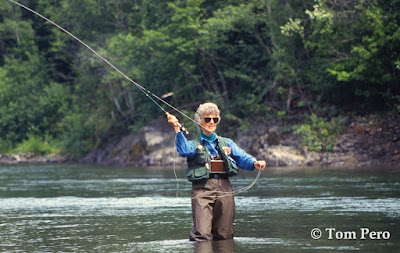
In 1960, 34-year-old Joan Cummings — later to become Joan Wulff — used a one-handed bamboo fly rod to cast 161 feet and set an unofficial women’s record. Unofficial because there was no women’s distance division in casting events at the time; Joan competed with the men.
In 2018, 14-year-old Maxine McCormick used a graphite rod to cast 161 feet in a similar one-handed event, matching Joan’s distance. This time, McCormick set an official women’s record at the World Championship of Flycasting and followed that up with a 189-foot cast in the two-handed distance event, another one of the six women’s events.
| Joan Wulff casting in Canada in 1997. |
Although the distance of McCormick’s record-setting cast was the same as Joan’s, competitive casting and fly fishing had undergone a sea change in the intervening six decades. “The arc of Joan’s life perfectly encompasses the development of modern fly fishing,” says Tom Pero, fishing writer and long-time friend of Joan’s, “from her graceful tournament casting with heavy bamboo rods and high-maintenance silk lines during the 1940s, to her flawless teaching with ultralight graphite rods and synthetic lines into the 2000s.”
The First Lady of Fly Fishing, as she is known, has both witnessed and helped bring about changes in fishing tackle and gear, along with influencing the popularity, demographics, and conservation ethos of the sport. Over her life and career, Joan Wulff, now 95, built a strong foundation for fly fishers, both women and men.
Read more of my latest article at Big Sky Journal.
Thursday, June 24, 2021
Range riders still roam central Idaho
| Roxy's ready to help new range riders learn to keep cattle where they belong. |
| Glenn Elzinga gets Sunny ready, with an assist from son-in-law Ethan Kelly. |
| Horses were tied up everywhere, far enough apart than nobody got tangled up. |
| Roxy strikes a pose. |
| Even the hitching rail held horses. |
| Hats off for a blessing before leaving. |
| Last minute adjustments. |
| Riders top the hill gathering cattle. |
| Abby (Elzinga) Kelly move the electric fence out of the way... |
| ...and checks that everyone's ready for her to open the gate and release the cattle. |
| It's hard to get water to make a right angle turn; the same is true for a herd of cattle. Here they're back on the road and headed up the hill. |
| The cattle leave behind their irrigated valley pastures for the upland range. |
| Buster helps by holding some heifers. |
| Everything's going well coming down the Pahsimeroi Road. |
| A long line of cattle follows the highway along the Salmon River for a short way. |
| The herd does great on this right angle turn. |
| Hooves over the Salmon River. |
| Melanie Elzinga points the way. |
| Riders, horses, and cattle all made it safely to public lands, where they'll send the summer. |
Wednesday, May 19, 2021
To predict cheatgrass die-offs we must understand their cause
| Army cutworms created this large die-off near Bruneau, Idaho in 2014. |
Download a pdf of this post here.
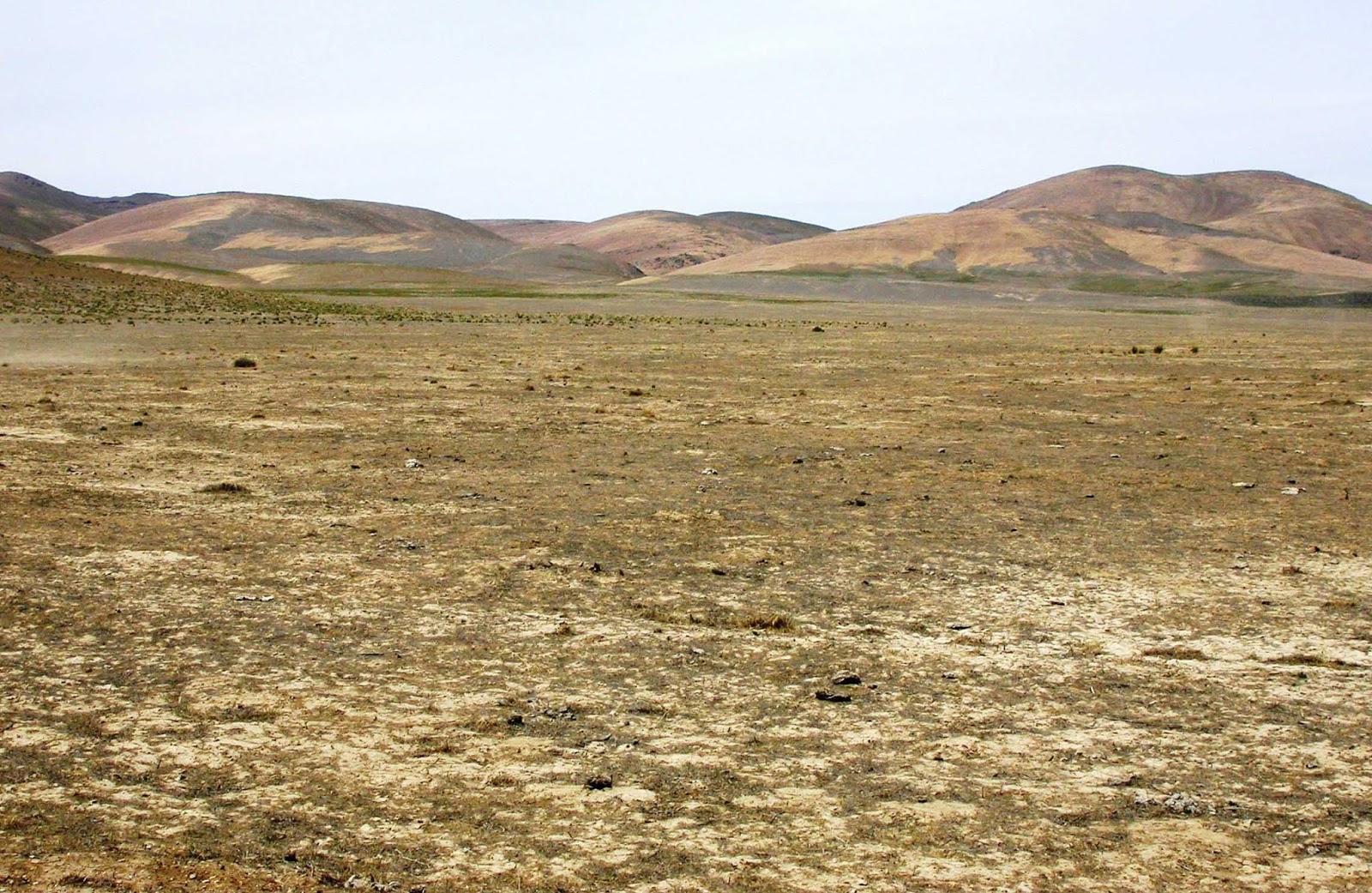
Cheatgrass (Bromus tectorum) die-offs are bare areas, often covered with gray plant litter, that appear suddenly within stands of normal-looking cheatgrass. Die-offs have distinct boundaries and can cover up to several square miles. Perennial grasses and forbs within die-offs are unaffected, but the exotic annual mustards (Brassicacaea) that often grow with cheatgrass are also missing. Cheatgrass die-offs are sporadic in time and space: widespread die-offs occur relatively rarely, and die-offs only infrequently reappear in the same place.
Ranchers and at least one researcher watched ACW eat cheatgrass in early 2003. Entomologists saw extensive ACW damage to crops in southwest Colorado and northern New Mexico. I saw a cheatgrass die-off in Nevada on April 17, 2003, but didn’t learn the cause of the bare area until later that year.
A remote sensing study has since confirmed that cheatgrass die-offs are most likely during a dry winter following a previous dry year (Weisberg et al. 2017). The lead author told me their study did not look at the effect of September precipitation.
Army cutworms are the most likely cause of cheatgrass die-offs
![]() |
| By spring, army cutworms are big and easy to spot. |
![]() |
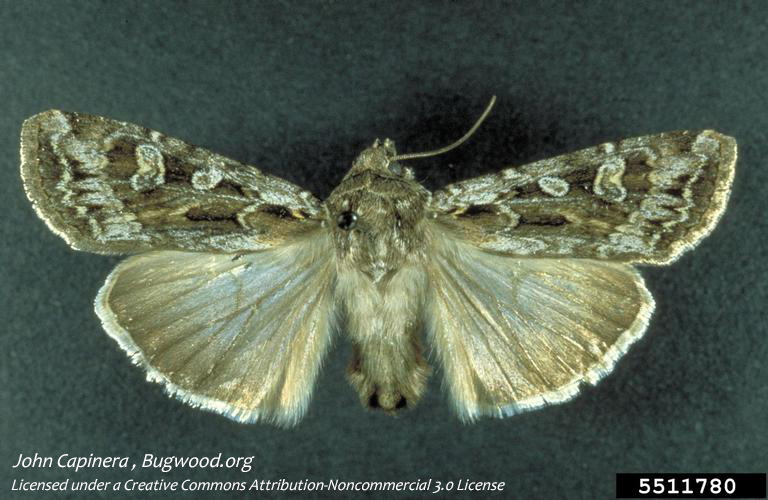
| Adult miller moths emerge in late spring. |
Occam’s Razor shaves away fungal pathogens
Previous reports of cheatgrass die-offs
| Klemmedson documented the 1960 cheatgrass die-off |
| Piemeisel 1951 describes dense cheatgrass stands |
Army cutworms are the most likely cause of cheatgrass die-offs
Researchers and ranchers have watched the larvae consumer cheatgrass, mustards, and the leaves of native shrubs (Salo 2018). The life cycles of cheatgrass and ACW, driven by weather, interact to produce periodic larval outbreaks that create die-offs sporadically across low, dry areas in the intermountain west.
When we understand ACW enough to predict their outbreaks, we’ll know when and where to look for die-offs. My “trapline” in Owyhee County, Idaho monitors fall miller moth flights; nearby weather stations in Grand View and Murphy record precipitation. When conditions that lead to ACW outbreaks occur though the end of January, it’s time to start looking for larvae and die-offs. Reseeding die-offs with desirable native species will let the sown plants get started while there are few cheatgrass seeds in the soil to sprout and compete with them.
Literature cited
Wednesday, May 12, 2021
Pollinators could benefit from the pandemic
| Native milkweeds: Asclepias tuberosa, A. speciosa, A. fascicularis (© Draggin' Wing High Desert Nursery) |
Wednesday, March 10, 2021
How did wheat take over the world?
Friday, February 19, 2021
Yellowstone cutthroat comeback
Saturday, April 18, 2020
April is the best time to spot cheatgrass die-offs
Cheatgrass die-offs are easy to spot in April. For bonus points, you might also find the army cutworms that create them by eating each grass shoot as it comes up. The bare die-offs stand out against the surrounding cheatgrass, which is having a growth spurt in the warm temperatures and plentiful moisture of spring.
Die-offs can be almost completely bare, where native shrubs were killed by fire and cheatgrass moved in. These are an alarming sight.
Die-offs in areas with native shrubs (sagebrush and saltbushes) are a little harder to spot. You'll see shrubs without any herbaceous plants growing underneath them. The shrubs might be missing a good portion of their leaves, as they are here.
To find cheatgrass die-offs look for:
1. Bare areas where cheatgrass grew in previous years, with or without shrubs.
2. Sharp borders to bare areas, changing abruptly from bare soil to normal-looking cheatgrass.
3. Native shrubs, if present, missing most of their leaves: army cutworms also climb shrubs and eat leaves.
4. Gray-green larvae hiding during the day under cowpies and plant litter or in the soil.
If you find cheatgrass die-offs, seize the opportunity to seed native plants and revegetate these areas.
Sunday, August 18, 2019
Light on the Devils: Coming of Age on the Klamath
After reading Louise Wagenknecht's book, I searched aerial photos to track her family's moves from Hilt, California, downriver to Happy Camp, and then to Seiad Valley during the 1960s. I wondered where her high school classmates committed suicide, died in vehicles rolling off mountain roads, gave birth between junior and senior years, and dropped out to work in the timber.
Then I searched topographic maps for the Three Devils peaks of the book's title. I traced the path of the Klamath River through the forests of northern California, where Wagenknecht's stepfather laid out clear cuts in old growth timber. I looked for the roads and bridges built to "get out the cut"—infrastructure the cut didn't pay for. I planned a road trip to see how the clear cuts were filling in and search for remaining old growth trees.
Between the crescendos of tragedy—floods, fires, and logger deaths—Wagenknecht records the steady bass beat of disappearing old growth timber and degraded watersheds and wildlife habitat. At the height of the post-World War II timber boom, a neighbor remembers California condors and Wagenknecht's family moves into a house with a large supply of kindling: veneer peeled from old growth pine.
But I didn't need a guide to follow Wagenknecht's journey from science geek kid who loved animals, through her dismay and disbelief when her stepfather tells her women can't be veterinarians and his co-worker tells her women can't fight fires—after she had just fought one, and on to her decision to attend college. She saw the contradictions in growing up female and told the world, and herself, that she wanted to be a science teacher—a nice, acceptable job for a high school valedictorian.
At home, Wagenknecht's stepfather decreed she would spend time doing her hair and nails, plus three agonizing hours a week holding up the walls and reading album covers at high school dances. But she, the oldest child, was also his hunting and fishing companion. She was the one who helped him fell trees for firewood and then split, load, and unload the fuel. She made a good hand and he made a good teacher. Despite their conflicts at home, they reached détente in the woods.
This book describes Wagenknecht's path toward a career with the Forest Service—which included fighting fires—and her détente in the woods with society.
Friday, April 5, 2019
Hunting the ancient agave
| Wendy Hodgson makes agave seeds fly in Cascabel. |
Although people have used agaves continuously in Mexico, the plants' cultivation and culture faded from what is now Arizona by the 18th century. Residents of the Middle San Pedro Valley have periodically wondered if we could grow agave in our area. After all, Sobaipuri Native American agave fields dot our community, and wild agaves grow in the valley.
When this question came up again last winter, we learned that survivors of pre-Columbian cultivated agave had recently been found in our area. Wendy Hodgson and her colleague Andrew Salywon, both with the Desert Botanical Garden, named the new species Agave sanpedroensis. Wendy and Andrew even suggested that this low-water-use crop could be revived to diversify agriculture and stimulate new industries in the U.S. Southwest.
| Agave sanpedroensis. |
Wendy and Andrew work with archaeologists, who have documented extensive agave fields at many sites in central and southern Arizona. Rows of rocks along contour lines slowed runoff across the fields and rock mulch piles reduced evaporation. Near the fields, archaeologists find knives used for removing leaves and roasting pits where agave stems, or "heads," were baked to sweetness.
The plants we see today are genetically identical to those the Sobaipuri and other groups developed to suit their needs. Unlike their wild relatives, these cultivated agaves produce little or no seed. Instead, the plants reproduce vegetatively, usually by pupping, to produce offspring identical to the parent. Cultivated agaves are also sweeter than their wild relatives and their leaves are easier to cut.
After surviving drought, insects, and rodents for centuries--or millennia--climate change and development threaten these rare plants. As cultivated crops, they fall into a protection gap: the Endangered Species Act protects only wild species and the Archaeological Resources Protection Act protects only inanimate artifacts.
Wendy fears that these recently discovered, living storehouses of information on people, culture, and plants could be lost. She is helping residents of the Middle San Pedro Valley learn about the ancient agaves in their area and work to protect them.
Wednesday, April 3, 2019
You can help agaves and bats in southern Arizona
Although nectar-feeding bats are most noticeable in the area, only two of the 30 bats native to Arizona feed from flowers; most Arizona bats eat insects. Both nectar-feeders, Choeronycteris mexicana (Mexican long-tongued bat) and Leptonycteris yerbabuenae (lesser long-nosed bat), visit Cascabel during warm months.
World-wide, the more than 1,300 bat species represent almost a fourth of the over 5,400 mammals. Bats have the agility to catch and eat prodigious amounts of night-flying insects and to pollinate night-blooming flowers atop tall agave stalks and columnar cacti.
Agaves and cacti provide bats a nectar meal in exchange for pollen the bats inadvertently carry among plants. The bats move with the blooms, from southern Mexico in winter to the grasslands of northern Mexico and the southern U.S. in summer.
This elegant partnership evolved over millions of years and is crucial to the survival of both partners. Currently, bats and agaves are both threatened by climate change and the loss of agaves to land clearing, development, and the harvest of wild agave for bacanora, the agave liquor of Sonora.
The lesser long-nosed bat is the more imperiled of the two nectar feeders in this area. Although this bat was removed from the endangered species list by the U.S. Fish and Wildlife Service in 2018, these pollinators are still at risk due to the decline of their nectar sources.
The Borderlands Restoration Network (BRN), in Patagonia, Arizona, works with many partners to protect bats by increasing their agave food supply. You can help both agaves and bats by participating in two of these projects.
BRN and volunteers track the effects of climate change on two native agaves in our area through the USA National Phenology Network's Flowers for Bats campaign. Many plants are blooming earlier as our climate warms. If bats migrate from Mexico on their usual schedule, but Agave parryi and Agave palmeri bloom earlier, the bats might arrive to find nothing to eat.
BRN replants agaves lost from the southwest U.S. and northwestern Mexico as part of Bat Conservation International's Agaves for Bats campaign. Each year, BRN collects agave pups and seed to grow thousands of agaves for planting by landowners.
If you haven't experienced a bat tornado, keep your hummingbird feeders full for the night shift, watch when agaves flower in your area, and plant some agaves at your place. Then step outdoors on a warm southern Arizona night and wait for the whirlwind.
Thursday, September 20, 2018
An entomological who dunnit
Scientific understanding usually shuffles along in the two-to-three-year steps of graduate student research projects. Big, intriguing mysteries take longer to resolve, but are more fun to research—and more interesting to read about.
Jeff Lockwood tackled the mystery of why the Rocky Mountain locust went extinct at the dawn of the 20th century. The species' periodic irruptions rivaled the bison in terms of biomass and the 1875 outbreak still horrifies young readers of Laura Ingles Wilder's, On the Banks of Plum Creek. Then the insects disappeared.
In his book, Lockwood recounts the challenges of sleuthing out a big mystery. Big research projects require new research techniques and years of soul-crushing work counting, dissecting, measuring, and recording data. Papers describing new research findings are sometimes rejected by academic journals; colleagues sometimes snicker. Unearthing the Rocky Mountain locust's secrets required field work at remote high elevation "grasshopper glaciers" reached by difficult climbs in foul weather.
Big research projects need lots of brains and lots of backs. Lockwood doesn't hog the limelight; he credits his employees, students, and colleagues for their inventions and insights. Field research is carried out by people, so it's a social activity, which Lockwood captures. A twenty-five-mile hike, completed in the dark, isn't quite as bad when you're not suffering alone, and joy shared at discovery is joy multiplied.
Other ecological changes in the late 19th century might have been linked with the locust's disappearance: decline of the bison, changes in climate, or reduced burning by Native Americans. Lockwood guides readers through the possibilities and explains why he rejects each. He focuses instead on the ecological bottleneck of limited egg-laying sites in valleys of the northern Rocky Mountains. Lockwood determines that when settlers plowed and grazed these areas, they destroyed the locust's eggs, and with them, the species. The culprit was settlers, in valleys, with plows, by accident.
Although the Rocky Mountain locust's sky-filling swarms are gone with the thundering bison herds, Lockwood ends his book by wondering if a few individuals may live incognito in less disturbed valleys of the Rockies. Another big, intriguing mystery.
Monday, September 10, 2018
Marathon health, lava stroke, and natural resources
Mike Medberry's legs carried him uphill to finish a half marathon the day before a clot in the 44-year-old's brain stopped blood flow, immobilizing his right side and scrambling his speech. His was the kind of stroke you want to have in the ER parking lot. But Medberry was hiking across lava at Craters of the Moon National Monument in Idaho. He spent most of a day waiting to be found and whisked to a hospital.
Medberry "became pure observer" while wounded and waiting on the lava. He describes the stroke clearly enough that I don't have to experience one myself to feel I have a working knowledge of the condition.
Recovering, Medberry learned to brush his teeth, drive, navigate phone trees, speak, and write. His struggles to organize his thoughts are heart-breaking. "…[T]he pieces of [his] brain were a blizzard of blowing pages ripped from a book." Medberry's emotional struggles are inspiring. His falling in love and recovering enough to say, "I do," are triumphs.
Interwoven with Medberry's own story is the story of Craters of the Moon. He was working to expand the national monument when the stroke found him there. Even after the stroke, he hiked and found peace on the lava.
I enjoyed Medberry's descriptions of Idaho landscapes, but I wondered about a few points in his discussion of cheatgrass. He's correct that the exotic annual grass fuels wildfires that damage native vegetation and the wildlife habitat it provides. But I cringed when I read that cheatgrass is "[a] poison brought here by cowboys, for cows." In its native range, cheatgrass is an insignificant grass that doesn't inspire purposeful sharing. Researchers understand that the grass was inadvertently introduced to the U.S. West.
The stark black and white cover photo of a hiker leaning against gravity to climb lava echoes the contrast between Medberry's marathon health and lava stroke. Natural resource issues are rarely as clear cut and the actors, both people and plants, are rarely completely good or evil.
Tuesday, August 28, 2018
Hawley Creek fish habitat work, Lemhi Valley
![]() |
| The Lemhi River south of Salmon, Idaho, in summer. |
![]() |
| Angus cattle in the Lemhi Valley. |
![]() |
| The Lemhi River north of Leadore, Idaho, in fall. |
In June, 2018, the LSWCD hosted a tour of improvements on Hawley Creek, near Leadore, Idaho. This tributary of the upper Lemhi has been returned to its original channel, after being diverted to a ditch, which left the creek bed dry for more than a century.
![]() |
| The LSWCD tour started where Hawley Creek enters the Lemhi Valley. |
![]() |
| Paddle wheels power rotating drum fish screens to keep salmon out of the pipeline--and fields. |
The pipeline and center pivot systems take less water out of the creek than the systems they replaced. This leave more water in Hawley Creek, which now adds more water to the Lemhi River.
Cumulatively, improvements on tributaries and the mainstem river have greatly increased flows in the Lemhi system. The reconnected waterways provide spawning sites for chinook salmon, steelhead, and resident trout, and nursery areas for young fish. The numbers of native fish in the Lemhi Valley are steadily increasing.
![]() |
| Sack lunches; come and get 'em. |
![]() |
| Trampled grass at Homo spaiens feeding area. |
The Upper Salmon Basin Watershed Program (USBWP) is installing beaver dam analogs (BDAs) in Hawley Creek, where it flows across the broad Lemhi Valley toward the mainstem river. These post and stick structures create pools that provide excellent fish habitat. Young cottonwoods trees are protected inside wire cages.
![]() |
| USBWP manager, Daniel Bertram, describes beaver dam analogs (BDAs) on Hawley Creek. |
![]() |
| Replanted willows line the original--and current--channel of lower Hawley Creek. |
![]() |
| Rancher Merrill Beyeler shares his local knowledge. |