|
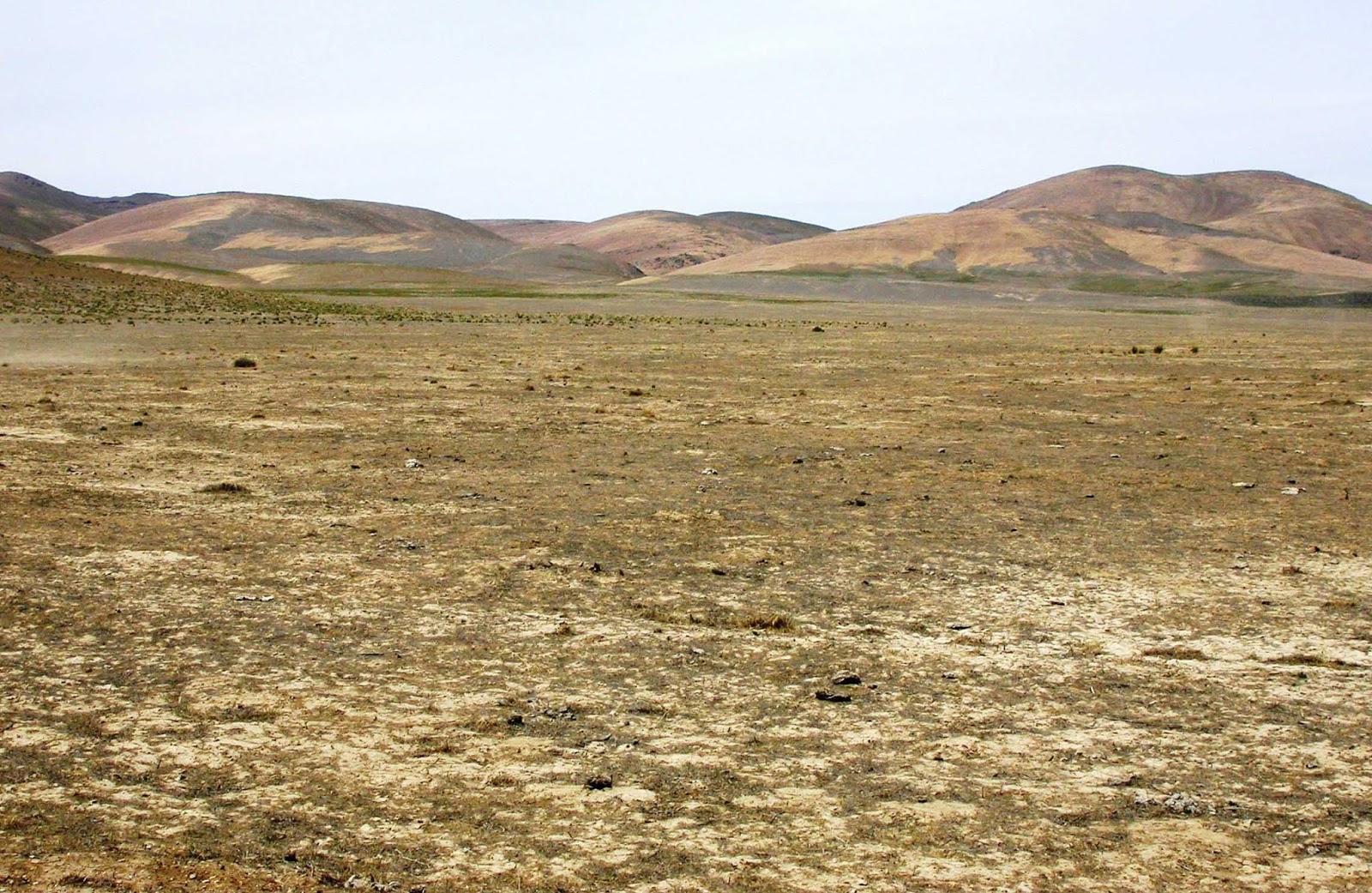
| Army cutworms created this large die-off near Bruneau, Idaho in 2014. |
Download a pdf of this post here.
Cheatgrass (Bromus tectorum) die-offs are bare areas, often covered with gray plant litter, that appear suddenly within stands of normal-looking cheatgrass. Die-offs have distinct boundaries and can cover up to several square miles. Perennial grasses and forbs within die-offs are unaffected, but the exotic annual mustards (Brassicacaea) that often grow with cheatgrass are also missing. Cheatgrass die-offs are sporadic in time and space: widespread die-offs occur relatively rarely, and die-offs only infrequently reappear in the same place.
Ranchers and at least one researcher watched ACW eat cheatgrass in early 2003. Entomologists saw extensive ACW damage to crops in southwest Colorado and northern New Mexico. I saw a cheatgrass die-off in Nevada on April 17, 2003, but didn’t learn the cause of the bare area until later that year.
 |
| Army cutworm outbreaks in the intermountain west are most likely after a year of dry weather is broken by September rain, followed by a large flight of miller moths, and a second period of dry weather through January. |
A remote sensing study has since confirmed that cheatgrass die-offs are most likely during a dry winter following a previous dry year (Weisberg et al. 2017). The lead author told me their study did not look at the effect of September precipitation.
Army cutworms are the most likely cause of cheatgrass die-offs
 |
| By spring, army cutworms are big and easy to spot. |
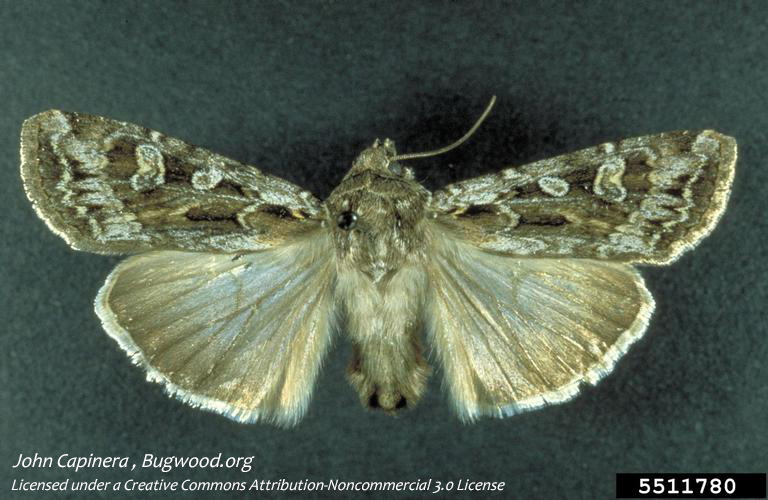 |
| Adult miller moths emerge in late spring. |
Occam’s Razor shaves away fungal pathogens

Previous reports of cheatgrass die-offs
 |
| Klemmedson documented the 1960 cheatgrass die-off |

 |
| Piemeisel 1951 describes dense cheatgrass stands |
Army cutworms are the most likely cause of cheatgrass die-offs
Researchers and ranchers have watched the larvae consumer cheatgrass, mustards, and the leaves of native shrubs (Salo 2018). The life cycles of cheatgrass and ACW, driven by weather, interact to produce periodic larval outbreaks that create die-offs sporadically across low, dry areas in the intermountain west.
When we understand ACW enough to predict their outbreaks, we’ll know when and where to look for die-offs. My “trapline” in Owyhee County, Idaho monitors fall miller moth flights; nearby weather stations in Grand View and Murphy record precipitation. When conditions that lead to ACW outbreaks occur though the end of January, it’s time to start looking for larvae and die-offs. Reseeding die-offs with desirable native species will let the sown plants get started while there are few cheatgrass seeds in the soil to sprout and compete with them.