The ancient residents of Chaco Canyon, New Mexico, tracked the seasons from rock observatories. Current residents of the nearest large town can track the seasons across the stone floor of the library.
When I visited the Farmington, New Mexico library in mid November, the low noon sun touched the edge of the winter solstice marker engraved into the floor.
If I had visited on December 21st I would have found the phrase “Winter Solstice 12:00” framed in light and the solstice celebration in full swing.
On June 21st the noon sun shines from overhead through a window atop the east door of the library to illuminate the summer solstice marker.
The Farmington Library sought community input while planning their new building, which opened in 2003. The cultures and landscapes of northwest New Mexico are reflected in the Native American and high desert motifs of the building.
The main entrance echoes the east-facing doors of hogans on the Navajo Reservation west of town. The central atrium, where the sun traces the time and space between the solstices, is the heart of the building. The library’s collections and services encircle the atrium and follow the cycle of life in a clockwise circuit.
Life’s journey starts in the Juvenile Collection on the south, moves to the Teen Zone in the west, and continues through the adult nonfiction and fiction sections. Multimedia resources and magazines wait on the east side, next to the entrance.
The library’s round design reflects nature in its paucity of straight lines. Chrome bookshelves fan out to in pie slices in the adult section, between the atrium and the glass wall on the north. The round windows in the interior and exterior walls remind me of portholes.
I checked email and downloaded digital photos and GPS coordinates in the Southwest Collection, protected by legions of kachina dolls dancing in glass display cases.
Beyond the rows of kachina dolls, a modern protector watches over the library’s materials. The Farmington Library was the first in the country where patrons check out all their own books and media. Their system uses radio frequency identification (RFID) tags, instead of the bar codes used at most libraries and in supermarket checkout lanes. The RFID readers in the atrium don’t have to “see” a visible bar code or demagnetize security “tattle tapes.” Borrowed materials just have to be close enough that the machine can scan their RFID tag with radio waves.
Pet owners use RFID tags when they get their cats and dogs “chipped.” If a pet gets lost, their name and owner’s contact information can be read with a hand held scanner.
I first heard of RFID tags in salmon. Thousands of young fish in the Pacific Northwest are tagged and tracked as they swim down the Columbia River on their way to the Pacific Ocean and again when they return to inland streams as adults to spawn and die.
I can't help picturing schools of shimmering books leaving the sea of library shelves and heading out into the world through the east entrance. I imagine the books expanding the minds of fifth graders, retired police officers, aspiring carpenters, and middle school teachers before returning to the stacks. Happily, the books, unlike salmon, make many round trips in their lifetimes.
When books return to the library, they are either walked in the front entrance or driven behind the READ sculpture to the automatic return in back. After patrons slide their returns through the slot, the RFID system checks in the materials and provides a receipt and a coupon for $5 off library fines.
This video shows the system in action. The last part, where materials are automatically sorted into bins, reminds me of the automatic gates that open and shut to sort tagged salmon for researchers to study.
The self check out--and in--system frees the library staff to help patrons and answer visitors’ questions. This has transformed the Circulation Desk of my childhood into the Service Desk in the Farmington Library’s atrium. A whiteboard next to the desk tells everyone they count: the board lists the number of people who visited the library and the number of book they checked out (themselves) the previous day. (A helpful reader pointed out that the numbers in the photo were from a Sunday, when the library is only open for four hours. On other days, 1050 to 1400 people visit the library.)
The library’s circulation system also freed up a security guard to do a short demo for me. He showed me the postage stamp-sized RFID tags inside each book. Then he showed me what happens when someone forgets to scan a book before they leave the library. We got prompt attention from the Service Desk.
The late afternoon sun had slipped below the southwest windows and the patch of light on the floor had disappeared by the time I left the library. I drove west into the sunset to Shiprock, NM before I turned north toward Boise.
The sun has made ten trips back and forth across the floor of the new library building. Last fall, before the winter celebration, the Farmington Library again asked the community to help plan their future. Area residents shared their ideas and hopes for the library in a time of shrinking budgets and growing populations.
The ancient residents of New Mexico had to use their resources wisely. Farmington's modern library is meeting its challenges while grounded in the area’s ancient traditions.
Monday, April 7, 2014
Monday, March 24, 2014
Late Winter Rains and Army Cutworms
Southwest Idaho's Winter of Ice Fog ended when snow fell in early February. The ridge of high pressure that had smothered us under a season-long inversion broke up. This allowed a procession of rainstorms to wash in from the Pacific.
The Treasure Valley smelled of damp, warm soil. Ranchers, farmers, and water managers cheered the promise of ample irrigation water and plentiful grass. An artist used every shade from Absinthe to Wintergreen to paint the Boise Green Belt in living, photosynthesizing color.
The rains couldn't save this year’s crop of cheatgrass in the dry areas along the Snake River south of Boise. Last fall, a prodigious storm germinated a flush of the winter annual grass, along with its annual mustard cousins. Sadly for the plants, their good luck didn't last. Happily for me, their subsequent misfortune confirmed an accusation I made 11 years earlier.
Clouds of miller moths returned from their summer in the mountains shortly after the rain storm. The moths laid eggs that hatched into army cutworms a month or so later. The larvae soon got down to business eating the tiny green cheatgrass and mustard plants.
The dry winter that followed was ideal for the cutworms, which are thought to develop fungal diseases in damp weather. But the cheatgrass and mustards struggled in the dry weather. The annual plants died from drought or were consumed by army cutworms. Perennial grasses, with their deeper roots, survived on the hills above areas where the annuals had died.
Hungry army cutworms roamed the bare areas looking for food...
...or hid under cowpies, during the day...
...where hungry centipedes stalked.
After the larvae consumed the annual plants, they went arboreal and climbed sagebrush...
...and fourwinged saltbush and kept eating.
Army cutworms also climbed the hills to munch on perennial Sandberg bluegrass, which seemed able to outgrow the larvae's feeding.
When they ran out of plants to eat, the cutworms dined on their fallen comrades.
This spring I caught army cutworms in the act of consuming cheatgrass and creating cheatgrass die-offs. Eleven years had passed since a rancher told me army cutworms were responsible for die-offs I saw near Winnemucca, NV in 2003, and an entomologist later described to me the conditions that allowed the larvae to explode.
The Treasure Valley smelled of damp, warm soil. Ranchers, farmers, and water managers cheered the promise of ample irrigation water and plentiful grass. An artist used every shade from Absinthe to Wintergreen to paint the Boise Green Belt in living, photosynthesizing color.
The rains couldn't save this year’s crop of cheatgrass in the dry areas along the Snake River south of Boise. Last fall, a prodigious storm germinated a flush of the winter annual grass, along with its annual mustard cousins. Sadly for the plants, their good luck didn't last. Happily for me, their subsequent misfortune confirmed an accusation I made 11 years earlier.
Clouds of miller moths returned from their summer in the mountains shortly after the rain storm. The moths laid eggs that hatched into army cutworms a month or so later. The larvae soon got down to business eating the tiny green cheatgrass and mustard plants.
The dry winter that followed was ideal for the cutworms, which are thought to develop fungal diseases in damp weather. But the cheatgrass and mustards struggled in the dry weather. The annual plants died from drought or were consumed by army cutworms. Perennial grasses, with their deeper roots, survived on the hills above areas where the annuals had died.
Hungry army cutworms roamed the bare areas looking for food...
...or hid under cowpies, during the day...
...where hungry centipedes stalked.
After the larvae consumed the annual plants, they went arboreal and climbed sagebrush...
...and fourwinged saltbush and kept eating.
Army cutworms also climbed the hills to munch on perennial Sandberg bluegrass, which seemed able to outgrow the larvae's feeding.
When they ran out of plants to eat, the cutworms dined on their fallen comrades.
This spring I caught army cutworms in the act of consuming cheatgrass and creating cheatgrass die-offs. Eleven years had passed since a rancher told me army cutworms were responsible for die-offs I saw near Winnemucca, NV in 2003, and an entomologist later described to me the conditions that allowed the larvae to explode.
Saturday, January 4, 2014
2013 Sugar Beet Harvest was a Challenging One
Metal dinosaurs come to life each fall across southern Idaho. Joints flex and belts whir to life at rural crossroads from Blackfoot to Nampa. Convoys of trucks unload sugar beets into the clanking creatures through the short fall days and into headlight-filled nights.
The beet dragons arrange the roots into tidy piles that demonstrate betaine physics in their angle of repose.
Trucks shoulder past each other on the narrow roads between the “beet dumps” and the fleets of harvesters in the fields.
Each harvester is attended by a bevy of trucks waiting their turn for a high horsepower, high volume pas de deux across the corduroy soil. As one truck is filled and peels off, another smoothly cuts in to take its place.
When the beet fields are empty and the dumps are full, larger trucks carry the beets, which look like sturdy, white garden beets, to processing plants. The plants extract from the lumpily pyramid-shaped roots the granulated white sugar we use in cooking. Livestock eat the high fiber beet pulp that is left.
In 2013, Idaho sugar beet growers produced record high yields, but were hit by a double whammy of low sugar content in the beets and low prices for the crop. I wrote about the challenges of this year’s harvest in a recent issue of the Intermountain Farm & Ranch section of the Idaho Falls Post Register. Growers hope that new higher-sugar beet varieties and careful management will boost sugar contents, and profits, next season.
The beet dragons arrange the roots into tidy piles that demonstrate betaine physics in their angle of repose.
Trucks shoulder past each other on the narrow roads between the “beet dumps” and the fleets of harvesters in the fields.
Each harvester is attended by a bevy of trucks waiting their turn for a high horsepower, high volume pas de deux across the corduroy soil. As one truck is filled and peels off, another smoothly cuts in to take its place.
When the beet fields are empty and the dumps are full, larger trucks carry the beets, which look like sturdy, white garden beets, to processing plants. The plants extract from the lumpily pyramid-shaped roots the granulated white sugar we use in cooking. Livestock eat the high fiber beet pulp that is left.
In 2013, Idaho sugar beet growers produced record high yields, but were hit by a double whammy of low sugar content in the beets and low prices for the crop. I wrote about the challenges of this year’s harvest in a recent issue of the Intermountain Farm & Ranch section of the Idaho Falls Post Register. Growers hope that new higher-sugar beet varieties and careful management will boost sugar contents, and profits, next season.
Sunday, December 15, 2013
Reestablishing Fire Cycles in the Great Plains
Before Europeans arrived, fires routinely swept the Great Plains, rejuvenating grasses and suppressing trees spreading from the riparian areas that cross the region. Whether lightening caused or set by Native Americans, fire maintained the grasslands and provided lush grazing for bison. Europeans plowed the grasslands for crops and put out wildfires, disrupting natural fire regimes.
Today, land managers in the Great Plains are setting planned burns to reintroduce fire and reestablish fire cycles. I wrote a fact sheet about using planned burns for the Great Plains Fire Science Exchange (GPFSE).
The GPFSE increases understanding and improves management of fire in the Great Plains. This region stretches from Montana and North Dakota to central Texas. The Exchange is funded by the Joint Fire Science Program (JFSP). The JFSP funds research on wildland fires needed by policy makers and land managers.
Today, land managers in the Great Plains are setting planned burns to reintroduce fire and reestablish fire cycles. I wrote a fact sheet about using planned burns for the Great Plains Fire Science Exchange (GPFSE).
The GPFSE increases understanding and improves management of fire in the Great Plains. This region stretches from Montana and North Dakota to central Texas. The Exchange is funded by the Joint Fire Science Program (JFSP). The JFSP funds research on wildland fires needed by policy makers and land managers.
Monday, October 7, 2013
Ranchers Helping Salmon in Idaho's Lemhi Valley
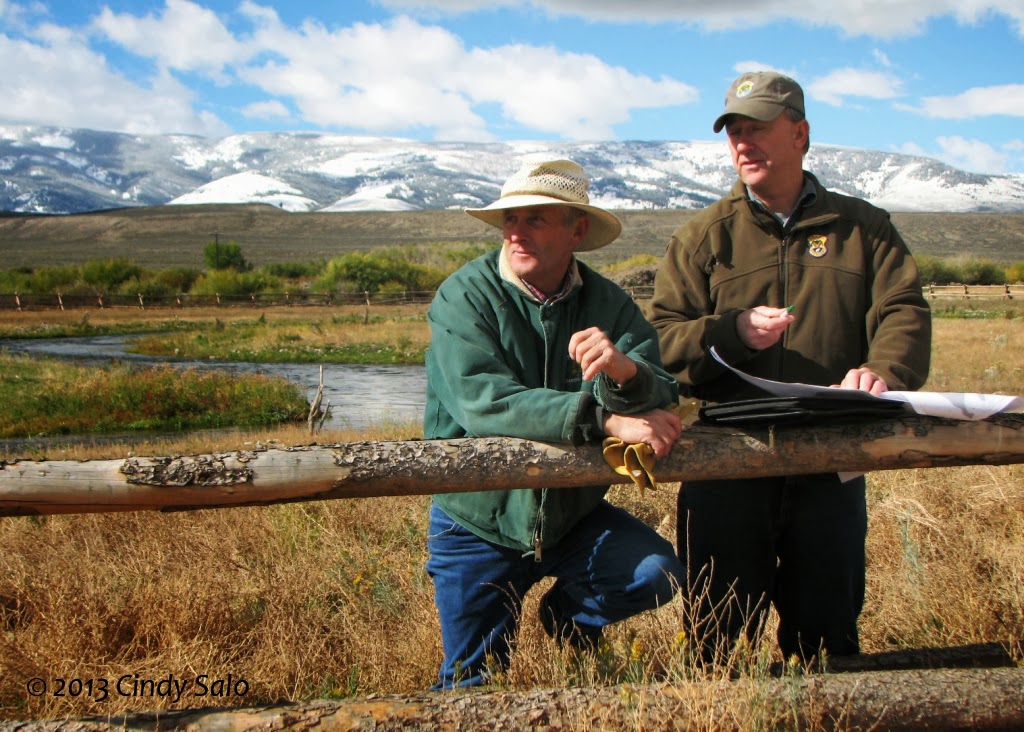
Salmon and ranchers both need water. Salmon swim up rivers and streams to spawn; ranchers irrigate hay fields to provide winter feed for their livestock. Eastern Idaho rancher Merrill Beyeler believes that these uses can coexist.
He is increasing salmon habitat in Idaho’s Lemhi Valley while improving his ranching operation.
Beyeler is working with other ranchers, The Nature Conservancy, Idaho Fish and Game, and other groups, to remove barriers to fish, reconnect tributaries to the main Lemhi River, return the river to its previous, winding channel, and increase flow at the mouth of the Lemhi. Often, these changes mean less work for him and other ranchers.
I wrote about Merrill Beyeler’s stewardship work in the current Intermountain Farm & Ranch.
He is increasing salmon habitat in Idaho’s Lemhi Valley while improving his ranching operation.
Beyeler is working with other ranchers, The Nature Conservancy, Idaho Fish and Game, and other groups, to remove barriers to fish, reconnect tributaries to the main Lemhi River, return the river to its previous, winding channel, and increase flow at the mouth of the Lemhi. Often, these changes mean less work for him and other ranchers.
I wrote about Merrill Beyeler’s stewardship work in the current Intermountain Farm & Ranch.
Tuesday, October 1, 2013
Solar Dairy
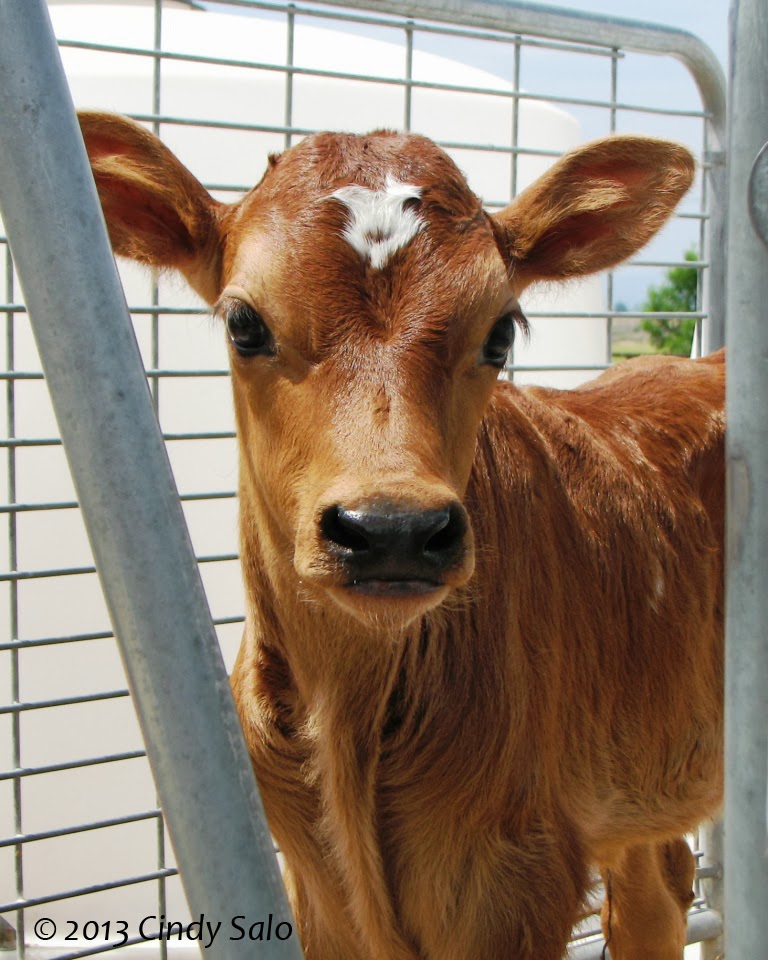
Cheese is protein-filled and delicious. Concentrating the goodness of milk into cheddars, Gouda, and Halloumi takes energy. Ballard Family Dairy and Cheese is using solar thermal energy, and other energy upgrades, to turn Jersey milk into irresistible, prize-winning cheeses. Learn more in my story, Sunnyside of Cheesemaking, in the Fall issue of Edible Idaho.
Thursday, August 29, 2013
Echoes of My Grandmother's Garden
The sign said, "Please ring the bell." I reached for the cord and was seven again.
My two brothers and I had just escaped from the car where we had spent two days tormenting each other with words and looks. Six fugitive feet thumped the slate stones around our grandmother's porch and past the well to the dinner bell waiting on a metal pole next to her garden. We took turns pulling the thick wire and filling the garden with sound. We pulled to announce our arrival, we rang for the joyful noise of it, and we sounded a greeting to our cousins on the next farm.
My turn peeled across the wheat field, around the corner of the hen house, among the black walnuts in the woods, over the backs of the cows in the lane, and across the wooden bridge at the creek, which might have sheltered trolls. I let go of the wire and the tones slowed, softened to silence.
I hadn’t rung a dinner bell since that summer, when we spent six weeks on our grandmother’s farm while our dad went to summer school.
The bell that invited me to ring it this time perched on a wooden tower in a campground two thousand miles and many decades from my grandmother’s farm. I looked up at it through red geraniums, white alyssum, and blue trailing lobelia. U.S. and Washington state flags spread from opposite sides of the tower like wings.
This time, my peels disappeared into the s forest that threatened to swallow the campground. My hands itched to pull the cord again and again. I wanted to punch through the trees and bounce the sound off the trunks of the Doug fir and Sitka spruce, let it echo across hollow clear cuts, and send it cascading down the rocky gorge of the Little North River nearby. I overpowered the seven year old in me after two rings and forced my fingers to release the cord.
Long before I had an excuse to reach for the cord again, a woman in jeans a size I haven’t squeezed into since high school walked briskly around the corner of the bell tower. She wore a bucket around her neck made from a restaurant-sized tin can with holes in it for a string. Raspberries filled a third of the can and pulsed with sugar pumped into them by the summer sun.
"I’m glad you rang the bell," she said. "I was in the garden."
Ann introduced herself and opened the office. She told me that she and her husband shared the bounty of their large garden with guests. The blueberries weren’t quite ripe, but the raspberries were at their peak, and many kinds of greens were ready. Greens? I needed greens!
I had escaped Boise’s 100-degree bright summer for camping and hiking in the dripping moss and fairy tale fog of the Olympic Peninsula. Headed south on the coast highway, I struggled to keep my eyelids open against the pressure of a lumberjack-sized lunch. I squinted at the Washington atlas and saw an RV Park hugging the road in Artic, the town named through poor penmanship: the founder meant to name the place after his wife, "Arta," but a clerk misread his writing.
I sighed and heaved the atlas back onto the passenger seat. I’d been welcome in Olympic National Park, but private RV parks rarely allow tenters. The ones that do, banish fabric accommodations out of sight in the noisiest, muddiest/dustiest corner, closest to the highway or nestled in the corner where truckers unleash their Jake brakes. The manager of a park in Oregon told me why: "Our RVers don’t like tenters.”
I started camping when RVs were as rare as showers in a Forest Service campground. Our parents took us to Interstate State Park, near our home in Minneapolis. I was enchanted by the stiff, musty canvas pup tent our dad set up in the back yard for a trial run. Two end poles kept most of the heavy tent from collapsing, with the help of a tangle of oily jute ropes and muddy wooden stakes with flat mushroom tops.
As I ran on the trails and jumped in and out of the potholes at the state park, I dreamed about sleeping that night in the tent. I could hear the wind shaking the stiff canvas and smell the oily fabric. My first night outdoors! But our dad made up beds for my younger brother and me in the car. In the car? That wasn’t sleeping outside! I’d been in a car before. I salve that childhood disappointment every time I set up my tent or shake out my sleeping bag or on a sandy beach during a river trip.
I glanced halfheartedly at the Artic Park sign as I passed. So halfheartedly that I couldn’t read it all before it disappeared behind me. On my second pass, I read "Tenting" and "Bicyclers welcome" at the bottom. I pulled in and walked to the office. Next to the office was a bell tower.
As Ann told me about the park and garden, a grizzled Garrison Keillor lookalike came in. She introduced her husband, Roy, who seconded Ann’s welcome. I asked about the squirrel dashing up and down trees, slashing its tail and jabbering at me as if I’d parked in his spot. Roy said it was a Douglas squirrel; the two of them were on opposite sides of the War of the Bird Feeders.
Ann showed me the garden and invited me to pick a bowl of raspberries for my breakfast. She assured me she hadn’t gotten them all. “Everyone’s at a different height so they see different berries. But please leave the Cascade berries; we use them for wine.” I was welcome to Swiss chard, lettuce, and kale, plus oregano, fennel, and something lemony from the herb garden. "Anything but the foxglove," Ann summed up.
My grandmother’s garden stretched from the dinner bell to the field that was in wheat the year we stayed six weeks. My young eyes could hardly imagine an end to the garden. I wanted to dig my toes into the damp soil under the scratchy straw, but Grandmother kept the rows of tomatoes, green beans, carrots, lettuce, strawberries, and asparagus firmly mulched.
Gladiolas next to the fence by the hen house were the only nonedible crop. I can still see her walking into Quaker meeting, her determined stride, leaning forward slightly, with a slight hitch of age, carrying a sturdy blue vase of "glads.”
We kids didn’t know what good food was. Vegetables and greens were obstacles to consume so we could go back to playing with the toad in the back yard, messing around at the creek, or watching the hogs in the barn lot. Home-canned morels were weird looking and gross. Lucky for us, our dad didn’t trust his mother-in-law's skill at identifying ascomycetes: he didn’t want us eating those things. My mother and grandmother didn’t argue; they served themselves a few more.
In Ann and Roy’s garden, I picked a grocery bag full of greens and herbs, plus a bowl of raspberries for breakfast (berries consumed while picking not shown). A net bag made a great camp salad spinner. I added sliced baby carrots, olive oil, and lime juice for the perfect antidote to a lumberjack lunch. A beer catalyst brought complete recovery.
I was writing in my camp chair at dusk when a white truck pulled a trailer past my site and circled around to an empty spot. A man got out and walked to the office. A moment later, the dinner bell rang.
Roy walked over from the house to check the man in. In a splash of light near the bell tower, the men talked about traveling, trailers, and trucks. They talked so long that a girl, a little older than I was when I rang my grandmother’s bell, left the trailer and walked to the office.
She waited for a break in the conversation to ask, "Can I ring the bell?"
“Sure,” said Roy.
The sound spiraled up from the bell tower to the Douglas squirrel’s nest. He lifted his head, listened, then tucked his nose under his tail and went back to sleep. The sound bounced across the berry canes, the salad greens, and the herb garden to the forest. The trees didn’t notice the sound, but I did. She rang for both of us when she pulled the cord again and again.
As I got ready for bed, an invisible orchestra of crickets scratched away under a Milky Way I see so infrequently that it always astonishes me. I zipped into my sleeping bag and thought about the fresh raspberries waiting for me in the cooler.
I hope that girl has a grandmother with a dinner bell in her backyard and a farm with a creek beyond the garden. Or was that the first real bell she’d heard among the electronic beeps that crowd, fill, deafen, clang, bang, her life? Would she pick berries and greens in the garden the next day? Or does she only eat food from the grocery store?
I wonder if the girl longed to leave the trailer and sleep in a tent as much as I did on my first camping trip. Will she find the same magic in sleeping outdoors that I do? When I set up my tent for the last time, I hope she'll be doing the same thing somewhere, and thinking about her journey from joyous bell ringer to confident camper.
_________
Note: In telling this story, I combined two conversations into one, to improve the flow.
My two brothers and I had just escaped from the car where we had spent two days tormenting each other with words and looks. Six fugitive feet thumped the slate stones around our grandmother's porch and past the well to the dinner bell waiting on a metal pole next to her garden. We took turns pulling the thick wire and filling the garden with sound. We pulled to announce our arrival, we rang for the joyful noise of it, and we sounded a greeting to our cousins on the next farm.
My turn peeled across the wheat field, around the corner of the hen house, among the black walnuts in the woods, over the backs of the cows in the lane, and across the wooden bridge at the creek, which might have sheltered trolls. I let go of the wire and the tones slowed, softened to silence.
I hadn’t rung a dinner bell since that summer, when we spent six weeks on our grandmother’s farm while our dad went to summer school.
The bell that invited me to ring it this time perched on a wooden tower in a campground two thousand miles and many decades from my grandmother’s farm. I looked up at it through red geraniums, white alyssum, and blue trailing lobelia. U.S. and Washington state flags spread from opposite sides of the tower like wings.
This time, my peels disappeared into the s forest that threatened to swallow the campground. My hands itched to pull the cord again and again. I wanted to punch through the trees and bounce the sound off the trunks of the Doug fir and Sitka spruce, let it echo across hollow clear cuts, and send it cascading down the rocky gorge of the Little North River nearby. I overpowered the seven year old in me after two rings and forced my fingers to release the cord.
Long before I had an excuse to reach for the cord again, a woman in jeans a size I haven’t squeezed into since high school walked briskly around the corner of the bell tower. She wore a bucket around her neck made from a restaurant-sized tin can with holes in it for a string. Raspberries filled a third of the can and pulsed with sugar pumped into them by the summer sun.
"I’m glad you rang the bell," she said. "I was in the garden."
Ann introduced herself and opened the office. She told me that she and her husband shared the bounty of their large garden with guests. The blueberries weren’t quite ripe, but the raspberries were at their peak, and many kinds of greens were ready. Greens? I needed greens!
I had escaped Boise’s 100-degree bright summer for camping and hiking in the dripping moss and fairy tale fog of the Olympic Peninsula. Headed south on the coast highway, I struggled to keep my eyelids open against the pressure of a lumberjack-sized lunch. I squinted at the Washington atlas and saw an RV Park hugging the road in Artic, the town named through poor penmanship: the founder meant to name the place after his wife, "Arta," but a clerk misread his writing.
I sighed and heaved the atlas back onto the passenger seat. I’d been welcome in Olympic National Park, but private RV parks rarely allow tenters. The ones that do, banish fabric accommodations out of sight in the noisiest, muddiest/dustiest corner, closest to the highway or nestled in the corner where truckers unleash their Jake brakes. The manager of a park in Oregon told me why: "Our RVers don’t like tenters.”
I started camping when RVs were as rare as showers in a Forest Service campground. Our parents took us to Interstate State Park, near our home in Minneapolis. I was enchanted by the stiff, musty canvas pup tent our dad set up in the back yard for a trial run. Two end poles kept most of the heavy tent from collapsing, with the help of a tangle of oily jute ropes and muddy wooden stakes with flat mushroom tops.
As I ran on the trails and jumped in and out of the potholes at the state park, I dreamed about sleeping that night in the tent. I could hear the wind shaking the stiff canvas and smell the oily fabric. My first night outdoors! But our dad made up beds for my younger brother and me in the car. In the car? That wasn’t sleeping outside! I’d been in a car before. I salve that childhood disappointment every time I set up my tent or shake out my sleeping bag or on a sandy beach during a river trip.
I glanced halfheartedly at the Artic Park sign as I passed. So halfheartedly that I couldn’t read it all before it disappeared behind me. On my second pass, I read "Tenting" and "Bicyclers welcome" at the bottom. I pulled in and walked to the office. Next to the office was a bell tower.
As Ann told me about the park and garden, a grizzled Garrison Keillor lookalike came in. She introduced her husband, Roy, who seconded Ann’s welcome. I asked about the squirrel dashing up and down trees, slashing its tail and jabbering at me as if I’d parked in his spot. Roy said it was a Douglas squirrel; the two of them were on opposite sides of the War of the Bird Feeders.
Ann showed me the garden and invited me to pick a bowl of raspberries for my breakfast. She assured me she hadn’t gotten them all. “Everyone’s at a different height so they see different berries. But please leave the Cascade berries; we use them for wine.” I was welcome to Swiss chard, lettuce, and kale, plus oregano, fennel, and something lemony from the herb garden. "Anything but the foxglove," Ann summed up.
My grandmother’s garden stretched from the dinner bell to the field that was in wheat the year we stayed six weeks. My young eyes could hardly imagine an end to the garden. I wanted to dig my toes into the damp soil under the scratchy straw, but Grandmother kept the rows of tomatoes, green beans, carrots, lettuce, strawberries, and asparagus firmly mulched.
Gladiolas next to the fence by the hen house were the only nonedible crop. I can still see her walking into Quaker meeting, her determined stride, leaning forward slightly, with a slight hitch of age, carrying a sturdy blue vase of "glads.”
We kids didn’t know what good food was. Vegetables and greens were obstacles to consume so we could go back to playing with the toad in the back yard, messing around at the creek, or watching the hogs in the barn lot. Home-canned morels were weird looking and gross. Lucky for us, our dad didn’t trust his mother-in-law's skill at identifying ascomycetes: he didn’t want us eating those things. My mother and grandmother didn’t argue; they served themselves a few more.
In Ann and Roy’s garden, I picked a grocery bag full of greens and herbs, plus a bowl of raspberries for breakfast (berries consumed while picking not shown). A net bag made a great camp salad spinner. I added sliced baby carrots, olive oil, and lime juice for the perfect antidote to a lumberjack lunch. A beer catalyst brought complete recovery.
I was writing in my camp chair at dusk when a white truck pulled a trailer past my site and circled around to an empty spot. A man got out and walked to the office. A moment later, the dinner bell rang.
Roy walked over from the house to check the man in. In a splash of light near the bell tower, the men talked about traveling, trailers, and trucks. They talked so long that a girl, a little older than I was when I rang my grandmother’s bell, left the trailer and walked to the office.
She waited for a break in the conversation to ask, "Can I ring the bell?"
“Sure,” said Roy.
The sound spiraled up from the bell tower to the Douglas squirrel’s nest. He lifted his head, listened, then tucked his nose under his tail and went back to sleep. The sound bounced across the berry canes, the salad greens, and the herb garden to the forest. The trees didn’t notice the sound, but I did. She rang for both of us when she pulled the cord again and again.
As I got ready for bed, an invisible orchestra of crickets scratched away under a Milky Way I see so infrequently that it always astonishes me. I zipped into my sleeping bag and thought about the fresh raspberries waiting for me in the cooler.
I hope that girl has a grandmother with a dinner bell in her backyard and a farm with a creek beyond the garden. Or was that the first real bell she’d heard among the electronic beeps that crowd, fill, deafen, clang, bang, her life? Would she pick berries and greens in the garden the next day? Or does she only eat food from the grocery store?
I wonder if the girl longed to leave the trailer and sleep in a tent as much as I did on my first camping trip. Will she find the same magic in sleeping outdoors that I do? When I set up my tent for the last time, I hope she'll be doing the same thing somewhere, and thinking about her journey from joyous bell ringer to confident camper.
_________
Note: In telling this story, I combined two conversations into one, to improve the flow.
Subscribe to:
Posts (Atom)